
In this article
Distinctive Features of Brânză de burduf
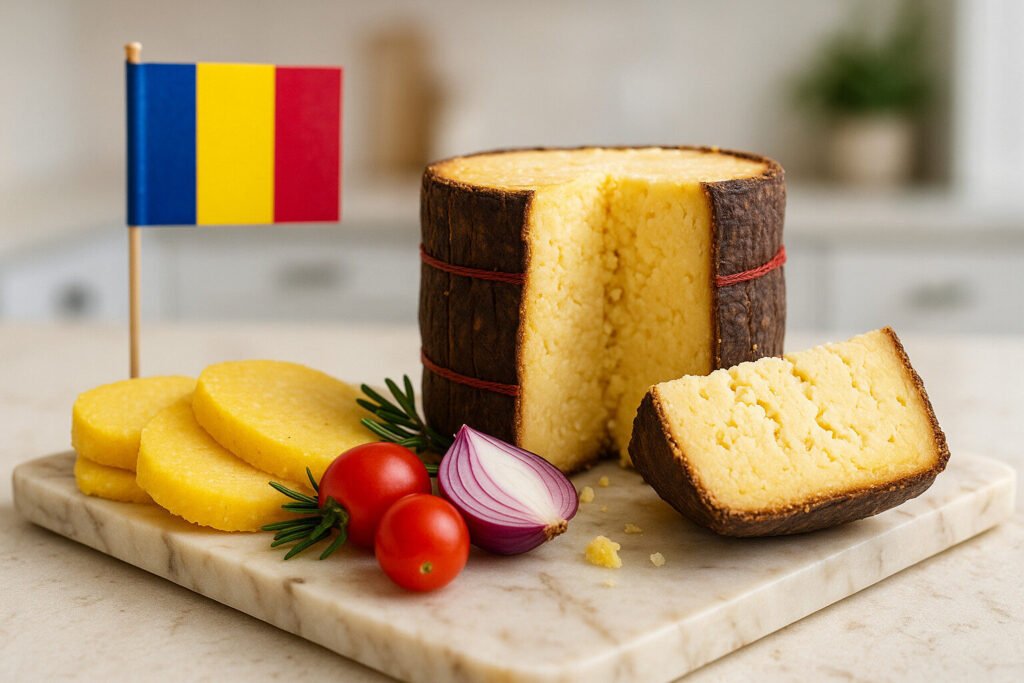
Brânză de burduf typically forms into cylindrical shapes weighing between 500 grams and 2 kilograms. Its rind is natural and often bears the imprint of the cloth or animal skin used during aging. The interior paste ranges from white to pale yellow, depending on the milk’s fat content and aging duration.
The texture is firm yet crumbly, with a slightly oily feel due to its high fat in dry matter, usually around 45-50 percent. Its consistency is dense and moist, making it easy to slice or grate. The aroma is robust and pastoral, with notes of sheep’s milk and a hint of saltiness from the brining process.
Brânză de burduf Varieties
Regional adaptations of Brânză de burduf include variations from Maramureș, which often uses milk from local Ţurcană sheep. This version may have a sharper taste and longer aging period. Producers in Transylvania might blend sheep’s milk with a small percentage of cow’s milk for a milder flavor profile.
Another variety comes from the Bucegi Mountains, where the cheese is smoked over beechwood for a distinct, earthy note. Some artisanal versions are aged in pine bark containers instead of sheep’s stomachs, adding a resinous nuance. These local differences highlight the diversity within Brânză de burduf production across Romania.
History and Traditions of Brânză de burduf
Brânză de burduf originated in the Carpathian Mountains, where shepherds developed it as a way to preserve milk during long transhumance seasons. Its name derives from “burduf,” the Romanian word for a sheep’s stomach used as a storage vessel. This cheese symbolizes the resourcefulness of Romanian pastoral communities.
The region is also famous for mămăligă (polenta) and tuică (plum brandy), which often accompany Brânză de burduf. Traditional festivals, such as the “Sâmbra Oilor” sheep returning ceremony, feature this cheese as a central dish. Stories tell of shepherds sharing Brânză de burduf with travelers as a sign of hospitality.
Production Process and Producers
Brânză de burduf starts with raw or pasteurized sheep’s milk from breeds like Ţurcană or Merino. The milk is warmed to about 30-35 degrees Celsius and coagulated with animal rennet. After cutting the curd, it is drained, salted, and kneaded before being packed into the burduf or other molds.
The cheese ages for a minimum of two months in cool, humid cellars, developing its characteristic flavor. Main producers in Romania include small-scale dairies in Maramureș, Transylvania, and Oltenia, such as Ferma Oaie din Maramureș, Brânzăria Carpaţi, and Lactate Sălaj. These producers uphold traditional methods while meeting modern standards.
Quality Labels and Certifications
As to our current knowledge, Brânză de burduf may hold a Protected Designation of Origin (PDO) status under European Union regulations. This certification ensures that the cheese is produced in specific Romanian regions using traditional methods. It guarantees authenticity and ties the product to its cultural heritage.
Some producers also obtain organic certifications, adhering to strict guidelines on animal welfare and sustainable farming. These labels assure consumers of high-quality, environmentally friendly practices. However, verification of current certifications should be checked with official sources.
Wine or Beverage Pairings
Brânză de burduf pairs excellently with full-bodied Romanian red wines like Fetească Neagră or Cabernet Sauvignon. These wines balance the cheese’s saltiness with their tannic structure and dark fruit notes. Local white wines such as Grasă de Cotnari also complement its richness with their aromatic profiles.
For non-alcoholic options, try apple cider or mineral water to cleanse the palate. Traditional Romanian ţuică (plum brandy) enhances the cheese’s robust flavors with its strong, fruity alcohol. International pairings include bold beers like stouts or Belgian ales.
Suitable Fruit and Vegetables
Fresh apples and pears provide a sweet contrast to Brânză de burduf’s salty intensity. Their crisp texture and juiciness refresh the palate between bites. Grapes, especially red varieties, add a burst of sweetness that harmonizes with the cheese’s depth.
Roasted bell peppers and onions bring a savory, caramelized element that complements Brânză de burduf. Tomatoes, both fresh and sun-dried, offer acidity that cuts through the cheese’s fat. Incorporate these into salads or serve them raw on a cheese board.
Suitable Meat and Fish dishes
Brânză de burduf enhances grilled pork chops or sausages by melting into the meat for a creamy sauce. Its saltiness seasons dishes like sarmale (cabbage rolls) when grated over the top. In stews, it adds depth and richness to traditional Romanian recipes.
For fish, pair it with smoked mackerel or trout to balance the oily textures. Crumble Brânză de burduf over baked fish fillets for a crispy, flavorful crust. It also works well in seafood pasta dishes, providing a sharp counterpoint to milder flavors.
Presentation of Brânză de burduf
Remove Brânză de burduf from the refrigerator at least one hour before serving to reach room temperature. This allows its aromas and flavors to fully develop. Serve it on a wooden or slate cheese board to maintain its rustic appeal.
Arrange slices or chunks alongside accompaniments like bread, fruits, and nuts. Use a sharp cheese knife for cutting and a separate spreader for serving. Provide small plates and forks for guests to enjoy the cheese comfortably.
Questions and Answers about Brânză de burduf
What is Brânză de burduf?
Brânză de burduf is a traditional Romanian cheese made from sheep’s milk and aged in animal skins. It is known for its firm texture and strong, salty flavor. Brânză de burduf is a staple in Romanian pastoral cuisine.
How should I store Brânză de burduf?
Store Brânză de burduf in the refrigerator wrapped in parchment paper or in an airtight container. Keep it away from strong odors to preserve its taste. Brânză de burduf can last for several weeks if stored properly.
Can I freeze Brânză de burduf?
Freezing Brânză de burduf is not recommended as it can alter its texture and flavor. It is best consumed fresh or refrigerated. Thawing may cause Brânză de burduf to become crumbly and lose its original quality.
Where can I buy Brânză de burduf?
You can buy Brânză de burduf in Romanian specialty stores, farmers’ markets, or online retailers. Look for authentic producers from regions like Maramureș. Brânză de burduf is also available in some international cheese shops.
How do I cut Brânză de burduf?
Use a sharp knife to slice Brânză de burduf into thin wedges or cubes. Cut against the grain to maintain its structure. Brânză de burduf can also be grated for cooking purposes.
What is the shelf life of Brânză de burduf?
Brânză de burduf typically has a shelf life of 2-3 months when stored correctly in the refrigerator. Check for any mold or off odors before consuming. Older Brânză de burduf develops a stronger flavor but remains safe to eat.
Is Brânză de burduf suitable for vegetarians?
Brânză de burduf is not suitable for vegetarians as it uses animal rennet in coagulation. It is a product of sheep’s milk and traditional animal-based processes. Vegetarians should seek alternatives without animal-derived ingredients.
Can I use Brânză de burduf in cooking?
Yes, Brânză de burduf is excellent for cooking, especially in traditional dishes like mămăligă. It melts well and adds a salty, rich flavor to recipes. Brânză de burduf can be baked, grilled, or used as a filling.
What milk is used for Brânză de burduf?
Brânză de burduf is primarily made from sheep’s milk, often from local breeds like Ţurcană. The milk contributes to its high fat content and distinctive taste. Some varieties may include small amounts of cow’s milk.
How is Brânză de burduf traditionally eaten?
Brânză de burduf is traditionally eaten with mămăligă (polenta) and raw onions. It is also served as part of a cheese platter with bread and wine. In rural areas, Brânză de burduf is enjoyed during festive meals and gatherings.
Recipe Ideas
Brânză de burduf with Mămăligă
This classic Romanian dish combines Brânză de burduf with creamy polenta for a comforting meal. The cheese’s saltiness balances the mildness of the mămăligă, creating a harmonious flavor profile. It is often served as a main course in households across Romania.
Preparing this dish highlights the versatility of Brânză de burduf in traditional cuisine. The cheese melts into the hot polenta, infusing it with rich, pastoral notes. Serve it with a side of sour cream and fresh herbs for added freshness.
- 200 grams Brânză de burduf, crumbled
- 250 grams cornmeal
- 1 liter water
- 1 teaspoon salt
- 50 grams butter
- 100 milliliters sour cream
- Fresh dill for garnish
- Bring water and salt to a boil in a large pot.
- Gradually whisk in the cornmeal, reduce heat, and simmer for 20 minutes, stirring frequently.
- Stir in the butter until melted and incorporated.
- Remove from heat and fold in the crumbled Brânză de burduf.
- Serve hot, topped with sour cream and garnished with fresh dill.
Brânză de burduf and Vegetable Salad
This refreshing salad showcases Brânză de burduf alongside seasonal vegetables for a light yet satisfying dish. The cheese adds a salty punch that contrasts with the crispness of the greens. It is perfect for summer picnics or as a starter.
Using fresh, local ingredients enhances the authenticity of this recipe. Brânză de burduf crumbles easily over the salad, distributing its flavor evenly. A simple vinaigrette ties all the elements together without overpowering the cheese.
- 150 grams Brânză de burduf, cubed
- 1 head lettuce, torn
- 2 tomatoes, chopped
- 1 cucumber, sliced
- 1 red onion, thinly sliced
- 3 tablespoons olive oil
- 1 tablespoon vinegar
- Salt and pepper to taste
- In a large bowl, combine lettuce, tomatoes, cucumber, and red onion.
- In a small jar, shake olive oil, vinegar, salt, and pepper to make the dressing.
- Pour the dressing over the vegetables and toss gently.
- Add the cubed Brânză de burduf and mix lightly to avoid breaking the cheese.
- Serve immediately for the best texture and flavor.
Similar Cheeses and Alternatives
Brânză de burduf shares similarities with other Romanian cheeses like Cașcaval, which is also a firm, salty cheese but often made from cow’s milk. Telemea, another Romanian variety, is brined and softer, offering a milder alternative. For international options, consider Greek Kefalotyri, which has a comparable hard texture and salty taste, or Italian Pecorino Romano, made from sheep’s milk and aged to develop a sharp flavor. These cheeses can be used in similar culinary applications, though Brânză de burduf’s unique aging process gives it a distinct pastoral character that is hard to replicate.