
In this article
Distinctive Features of Formatge de vaca d’Andorra
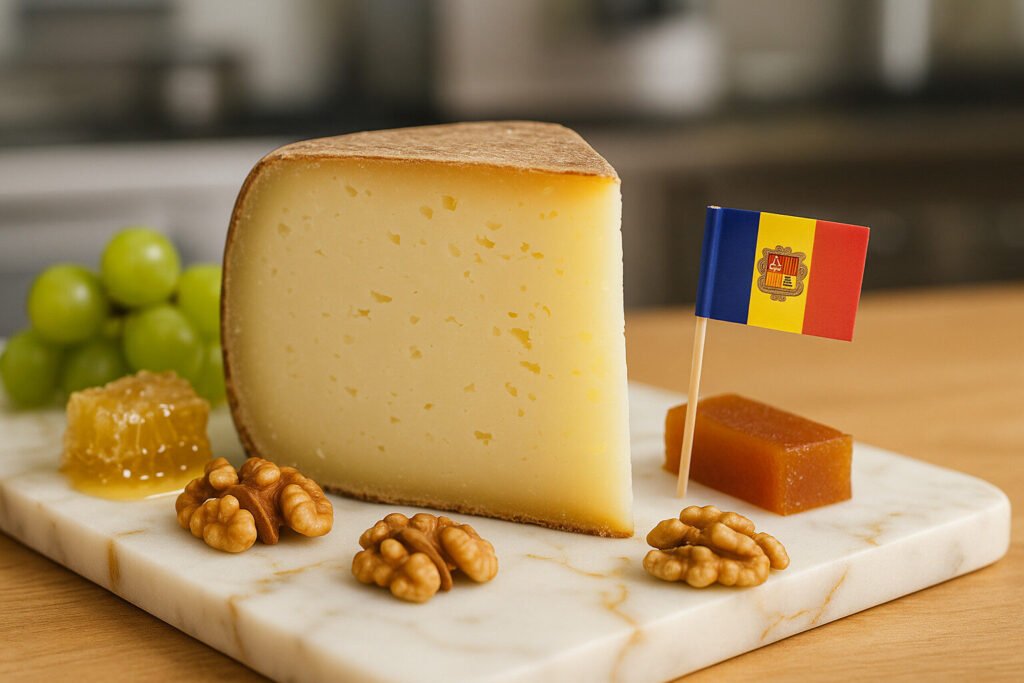
Formatge de vaca d’Andorra typically forms into medium-sized wheels weighing between 1.5 and 2.5 kilograms. Its exterior develops a natural, thin, beige to light brown rind from its aging process. The interior paste is a consistent pale yellow color, indicating its richness from the high-quality cow’s milk.
The texture is semi-hard and smooth, offering a slight suppleness without being crumbly. It has a medium humidity level, making it excellent for slicing. Its aroma is mild and milky with a clean, fresh scent reminiscent of the mountain hay.
Formatge de vaca d’Andorra Varieties
The primary variety of Formatge de vaca d’Andorra is aged for a minimum of three weeks. This young version is mild, creamy, and excellent for melting. Some producers create a more aged version, often called ‘formatge curat’, which is matured for several months. The aged cheese develops a firmer texture and a more pronounced, complex flavor.
Another subtle variety depends on the specific valley of production within Andorra. Cheeses from higher altitudes can have a slightly sharper taste due to the particular alpine grasses. All varieties use raw or pasteurized milk from local cow breeds that graze on natural pastures.
History and Traditions of Formatge de vaca d’Andorra
Formatge de vaca d’Andorra has deep roots in the pastoral traditions of the Pyrenees. For centuries, Andorran farmers produced cheese as a vital method of preserving nutrient-rich milk through the long winters. This cheese was a staple food source for local families living in isolated mountain villages. Its production was a communal activity, often involving knowledge passed down through generations.
The region of Andorra is also famous for its smoked meats, like bringuera, and its honey. Beverages include traditional herbal liquors such as ratafia. While it does not hold a PDO status, the cheese is a symbol of national pride and rural heritage. Today, it is celebrated at local festivals and markets, connecting modern Andorra to its agricultural past.
Production Process of Formatge de vaca d’Andorra
The production begins with fresh, whole cow’s milk, often from the Bruna dels Pirineus breed. The milk is gently warmed and coagulated using animal rennet. The resulting curd is cut into small rice-sized grains to expel whey. This careful cutting is crucial for achieving the cheese’s characteristic dense yet supple texture.
The curds are then pressed into moulds to form the distinctive wheel shape. After pressing, the cheeses are salted, either by brining or dry-salting. They are aged in cellars or caves with controlled humidity and temperature. The aging period lasts from three weeks to over six months, defining the final flavor profile.
Wine or Beverage Pairings for Formatge de vaca d’Andorra
Young Formatge de vaca d’Andorra pairs beautifully with a crisp white wine from Catalonia. A young Garnatxa Blanca or a light Godello complements its creamy freshness. For a regional pairing, a glass of chilled cava provides effervescence that cleanses the palate. Local herbal liquors like ratafia also match its mild, nutty character.
The aged, more robust version demands a wine with more body. A Tempranillo from nearby Spanish regions or a light Syrah works wonderfully. For beer lovers, a malty amber ale or a Belgian-style Saison highlights its complex notes. A dry cider is another excellent non-wine option that cuts through the cheese’s richness.
Suitable Fruit and Vegetables for Formatge de vaca d’Andorra
Fresh apples and pears are classic partners for Formatge de vaca d’Andorra. Their crisp sweetness and slight acidity contrast the cheese’s savory creaminess. Figs, both fresh and dried, offer a jammy texture and deep flavor that enhances the cheese’s nuttiness. A handful of walnuts or almonds provides a crunchy counterpoint and complements its flavor profile.
For vegetables, consider lightly grilled asparagus or artichoke hearts. Their earthy flavors marry well with the cheese’s herbal undertones. A simple green salad with a sharp vinaigrette can be served alongside a cheese plate. Sun-dried tomatoes also offer a tangy, concentrated flavor that pairs nicely.
Suitable Meat and Fish Dishes for Formatge de vaca d’Andorra
Formatge de vaca d’Andorra melts superbly, making it ideal for gratins and sauces. It is excellent grated over a chicken and ham escalivada bake. Thin slices can elevate a simple beef burger with its rich, melting quality. Its mildness does not overpower more delicate proteins.
For charcuterie boards, pair it with mild cured meats like lacón or fuet. It complements the saltiness of Serrano ham without competing. For fish, try it in a creamy sauce for a baked cod or hake dish. The cheese adds depth and richness to the light flavor of the fish.
Presentation of Formatge de vaca d’Andorra
Remove Formatge de vaca d’Andorra from the refrigerator at least one hour before serving. This allows it to reach the ideal temperature of around 18 to 20°C. At this temperature, its aroma and full flavor profile are perfectly expressed. Serve it on a wooden board or a slate plate to showcase its rustic character.
Arrange whole wedges or slices fanned out on the plate. Provide a separate cheese knife with a sharp blade for easy slicing. For eating, a standard cheese knife or a small spreader is sufficient. Accompany the cheese with bread, crackers, and the suggested pairings like fruit and nuts for a complete presentation.
Recipe Ideas with Formatge de vaca d’Andorra
Andorran Potato and Cheese Bake (Trinxat)
Trinxat is a traditional Andorran and Catalan dish that translates to ‘chopped’. It is a humble, comforting peasant food designed to be hearty and nutritious. This recipe modernizes the classic by incorporating Formatge de vaca d’Andorra for extra richness and flavor. It is perfect for a cold evening and showcases the cheese’s excellent melting properties.
The combination of cabbage, potato, and bacon is a classic of the region. The cheese adds a creamy layer that binds everything together beautifully. This dish is often served as a main course with a simple green salad on the side. It represents the essence of Pyrenean mountain cuisine.
- 500g potatoes, peeled and quartered
- 300g green cabbage, roughly chopped
- 150g bacon lardons or pancetta
- 200g Formatge de vaca d’Andorra, grated
- 2 cloves garlic, minced
- Salt and black pepper to taste
- 2 tablespoons olive oil
- Boil the potatoes in salted water for 15 minutes. Add the cabbage and cook for a further 10 minutes, or until both are tender. Drain thoroughly.
- While the potatoes and cabbage are cooking, fry the bacon lardons in a large oven-proof skillet until crispy. Remove with a slotted spoon, leaving the fat in the pan.
- Mash the drained potatoes and cabbage together roughly—it should not be smooth. Season well with salt and pepper.
- Heat the bacon fat in the skillet over medium heat. Add the garlic and cook for 1 minute until fragrant.
- Press the potato and cabbage mixture into the skillet. Cook for 5-7 minutes without stirring to form a golden crust on the bottom.
- Preheat the grill of your oven. Sprinkle the grated cheese evenly over the top of the mixture.
- Place the skillet under the grill for 3-5 minutes, until the cheese is melted and bubbly. Scatter the crispy bacon over the top and serve immediately.
Formatge de vaca d’Andorra and Pear Flatbread
This flatbread is an elegant yet simple appetizer or light lunch. It highlights the beautiful pairing of the cheese with sweet, ripe pears. The recipe uses store-bought flatbread for convenience, allowing the quality ingredients to shine. It is a fantastic way to enjoy the cheese’s flavor in a modern context.
The warmth of the baked flatbread gently melts the cheese, releasing its aroma. The honey drizzle at the end enhances the natural sweetness of the pears and the nuttiness of the cheese. A sprinkle of fresh thyme adds an herbal note that ties all the elements together. This dish is sure to impress guests at any gathering.
- 2 large pre-made flatbreads or naan breads
- 200g Formatge de vaca d’Andorra, thinly sliced
- 1 ripe but firm pear, thinly sliced
- 50g walnuts, roughly chopped
- 2 tablespoons honey
- 1 tablespoon fresh thyme leaves
- Olive oil for drizzling
- Freshly ground black pepper
- Preheat your oven to 200°C (180°C fan). Place the flatbreads on a baking sheet.
- Lightly drizzle the flatbreads with olive oil. Arrange the thin slices of cheese evenly over the surface.
- Scatter the thin pear slices and chopped walnuts over the cheese.
- Bake in the preheated oven for 8-10 minutes, until the edges of the flatbread are crisp and the cheese has melted.
- Remove from the oven and immediately drizzle with honey. Sprinkle with fresh thyme leaves and a grind of black pepper.
- Slice and serve warm.
Similar Cheeses and Alternatives to Formatge de vaca d’Andorra
Formatge de vaca d’Andorra shares similarities with other semi-hard Pyrenean cow’s milk cheeses. Its closest relative is arguably Alt Urgell cheese from the neighboring Catalan comarca. Both cheeses offer a mild, buttery profile and excellent melting qualities. Another good alternative is Ossau-Iraty Brebis, though it is made from sheep’s milk, which gives it a slightly different, sharper flavor.
For a slightly stronger option, consider a young Mahón from Menorca. It has a similar texture but a more tangy, salty character due to its brining process. Internationally, a Swiss Tilsiter or a young Dutch Gouda can provide a comparable mildness and meltability. These alternatives work well in cooking or on a cheese board when the original is unavailable.
Questions and answers about Formatge de vaca dAndorra
Where can you buy this cheese about Formatge de vaca dAndorra?
For Formatge de vaca dAndorra, look for it in specialty cheese shops or markets in Andorra and Catalonia. Some online retailers may also offer it for delivery. Local festivals in the Pyrenees region often feature this artisanal product.
What fruits go well with this cheese?
For Formatge de vaca dAndorra, fresh apples and pears provide a crisp sweetness that contrasts its savory creaminess. Figs, both fresh and dried, enhance its nutty character. Walnuts or almonds also make excellent accompaniments for added crunch.
How long can you keep this cheese about Formatge de vaca dAndorra?
For Formatge de vaca dAndorra, when stored correctly in the refrigerator, it can last for several weeks. Check for any mold or off odors to ensure it is still safe to eat. The shelf life may vary depending on whether it is young or aged.
Can you use this cheese in cooking about Formatge de vaca dAndorra?
For Formatge de vaca dAndorra, yes, it melts superbly, making it ideal for gratins, sauces, and baked dishes. It adds a rich, buttery flavor to traditional recipes like Trinxat. The cheese binds ingredients together beautifully when heated.
What are some good wine pairings for this cheese?
For Formatge de vaca dAndorra, a young version pairs well with a crisp white wine like Garnatxa Blanca from Catalonia. For an aged variety, try a Tempranillo or a light Syrah. Cava or a dry cider also complement its flavors nicely.
How should you store this cheese properly about Formatge de vaca dAndorra?
For Formatge de vaca dAndorra, wrap the cheese in wax paper or parchment paper to allow it to breathe. Store it in the vegetable drawer of your refrigerator at around 4°C. This method helps maintain its texture and prevents it from drying out.
What is Formatge de vaca dAndorra?
For Formatge de vaca dAndorra, this cheese has a semi-hard and smooth texture that is slightly supple. It is not crumbly and offers a pleasant density when sliced. The medium humidity level contributes to its excellent slicing quality.