
In this article
Distinctive Features of Manchego
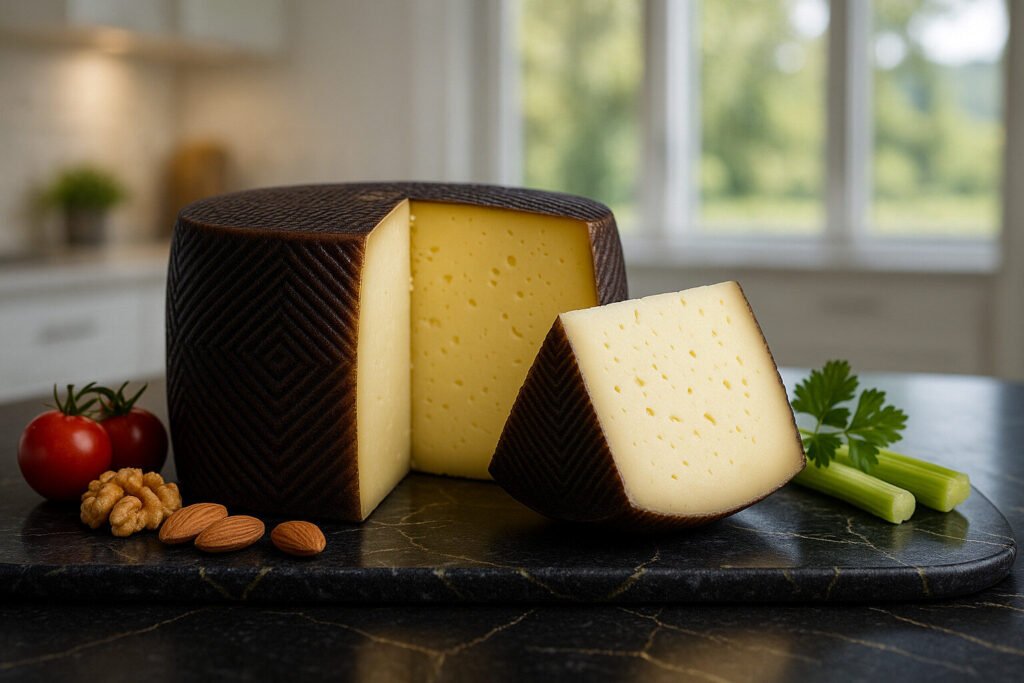
Manchego cheese typically forms into cylindrical wheels weighing between 1 and 3 kilograms. Its interior presents a uniform ivory to pale yellow color. The natural rind is inedible and often displays a characteristic zigzag or herringbone pattern from the traditional esparto grass molds.
The texture of Manchego is firm and compact yet can be slightly granular. Its consistency ranges from semi-soft in younger cheeses to hard and crumbly in aged versions. The humidity level is relatively low, usually around 35 to 40 percent, which aids preservation.
How Manchego is Typically Used
Manchego serves as a superb table cheese enjoyed on its own or with accompaniments. It melts beautifully in cooked dishes, adding a rich, savory depth. Many people slice Manchego for tapas or grate it over salads and pasta.
- Serve Manchego thinly sliced with membrillo (quince paste) and marcona almonds.
- Cube Manchego for cheese boards paired with dry sherry or robust red wines.
- Grate aged Manchego over grilled vegetables, soups, or risottos.
- Melt Manchego into sauces or use it in stuffed poultry and meat dishes.
- Enjoy Manchego as a snack with crusty bread and olives.
Nutrition Values and Using Manchego in Diets
| Nutrient | Value per 100 grams (typical range) |
|---|---|
| Energy | 400 – 450 kcal |
| Fat | 30 – 35 g |
| Protein | 25 – 30 g |
| Carbohydrates | 1 – 2 g |
| Sodium | 600 – 800 mg |
| Calcium | 700 – 900 mg |
Manchego provides high-quality protein and essential minerals like calcium. Its rich fat content offers sustained energy, making it valuable in balanced diets. Moderate portions of Manchego can support bone health and muscle maintenance.
Incorporate Manchego sparingly into calorie-controlled or low-sodium diets due to its density. Pair it with high-fiber foods like apples or whole grains to enhance satiety. Always consider individual dietary needs when enjoying Manchego.
Ingredients and Production Process of Manchego
Manchego cheese uses only raw or pasteurized milk from Manchega sheep. The milk must meet strict quality standards set by the regulatory council. Natural animal rennet initiates the coagulation process, and salt is added for flavor and preservation.
Producers heat the milk to approximately 30 degrees Celsius before adding rennet. The curds form within 30 to 45 minutes and are cut into small rice-sized grains. This step ensures the proper expulsion of whey and influences the final texture.
Workers then transfer the curds into cylindrical molds that imprint the characteristic pattern. The cheese undergoes pressing for several hours to remove excess moisture. After pressing, the wheels are brined or dry-salted for a period of up to 48 hours.
Aging occurs in controlled cellars at temperatures between 10 and 15 degrees Celsius. Manchego ages for a minimum of 30 days up to two years, developing complexity. Regular turning and brushing maintain the rind and ensure even maturation throughout the process.
Questions and Answers about Manchego
What is Manchego cheese?
Manchego is a Spanish cheese made from sheep’s milk, specifically from the Manchega breed. It has a protected designation of origin from the La Mancha region. Manchego is known for its firm texture and nutty flavor.
How should I store Manchego?
Store Manchego in the refrigerator wrapped in wax paper or parchment. Keep Manchego in the cheese drawer to maintain humidity. Proper storage preserves the flavor and texture of Manchego for several weeks.
What is the shelf life of Manchego?
Unopened Manchego can last up to three months in the fridge. Once cut, consume Manchego within two to three weeks for best quality. Aged Manchego generally has a longer shelf life than fresh versions.
Can I cook with Manchego?
Yes, Manchego melts well and enhances many dishes. Use Manchego in gratins, sauces, or as a topping. Cooking with Manchego adds a distinctive Spanish flair to your meals.
Where can I buy authentic Manchego?
Purchase Manchego at specialty cheese shops, gourmet markets, or online retailers. Look for the PDO seal to ensure authenticity. Imported Manchego is widely available in many countries.
How do I cut Manchego properly?
Cut Manchego into thin wedges or slices using a sharp knife. For aged Manchego, crumble it with a fork. Proper cutting enhances the eating experience of Manchego.
What wines pair well with Manchego?
Manchego pairs excellently with Spanish wines like Tempranillo or Rioja. White wines such as Albariño also complement Manchego. The pairing depends on the age and intensity of the Manchego.
Is Manchego suitable for vegetarians?
Traditional Manchego uses animal rennet, making it unsuitable for strict vegetarians. Some producers offer vegetarian-friendly Manchego with microbial rennet. Always check the label when buying Manchego.
How is Manchego different from other sheep’s milk cheeses?
Manchego has a specific origin and production method protected by law. Its flavor is milder than many Pecorino cheeses. The herringbone rind is a unique identifier for Manchego.
Can I freeze Manchego?
Freezing Manchego is not recommended as it alters the texture. Thawed Manchego may become crumbly and lose flavor. It is best to enjoy Manchego fresh or properly refrigerated.
Manchego Varieties in Different Countries
Manchego-like Cheeses in France
France produces Ossau-Iraty, a similar sheep’s milk cheese from the Pyrenees. Ossau-Iraty has a firm texture and nutty taste reminiscent of Manchego. It ages for a minimum of 90 days, developing a smooth, buttery flavor.
French regulations protect Ossau-Iraty with an AOC designation. The cheese uses milk from Manech and Basco-Béarnaise sheep breeds. Its production involves traditional methods including pressing in molds and natural aging.
Manchego-style Cheeses in Italy
Italy offers Pecorino Romano, a hard sheep’s milk cheese with a salty profile. Pecorino Romano is aged longer than most Manchego, often for eight months or more. It has a granular texture and is primarily used for grating.
Pecorino Sardo is another Italian cheese similar to Manchego. It comes from Sardinia and can be either mild or aged. The production includes smoking or aging in caves for distinct flavors.
Manchego-inspired Cheeses in Portugal
Portugal produces Serra da Estrela, a soft to semi-soft sheep’s milk cheese. Unlike Manchego, Serra da Estrela has a creamy, spreadable consistency when young. It is made from the milk of Bordaleira sheep in the Serra da Estrela mountains.
Azeitão is another Portuguese cheese that shares sheep’s milk origins. It is smaller and softer than Manchego, with a pungent aroma. Thistle rennet gives Azeitão its unique floral notes.
Manchego Variations in the United States
American artisans craft sheep’s milk cheeses inspired by Manchego. These cheeses often use local sheep breeds and adapt to regional climates. They may lack the PDO status but emulate the firm texture and nutty flavor.
Some US producers age their Manchego-style cheeses for shorter periods. This results in a milder product suited to American palates. Innovations include adding herbs or smoking for variety.
Manchego-type Cheeses in Argentina
Argentina produces Queso de Oveja, influenced by Spanish traditions. This cheese uses milk from Patagonian sheep and ages for several months. It has a firm texture and slightly sharper taste than Manchego.
Argentinian versions often incorporate local techniques like grass-fed influences. The cheese is popular in domestic markets and exported to neighboring countries. It serves as a key ingredient in Argentine cuisine.
Manchego Around the World
Manchego enjoys global recognition, with similarities found in many sheep’s milk cheeses. These cheeses share a foundation of traditional methods and high-quality milk. Differences arise from local breeds, terroir, and aging practices.
Varieties worldwide adapt Manchego’s principles to regional tastes. For example, American versions might be milder, while Italian ones are saltier. This diversity enriches the global cheese landscape while honoring Manchego’s legacy.
Manchego remains a benchmark for quality and tradition in the cheese world. Its influence inspires cheesemakers across continents to pursue excellence. Enjoying Manchego connects consumers to a rich culinary heritage.