
Discovering Brunost Cheese from Norway
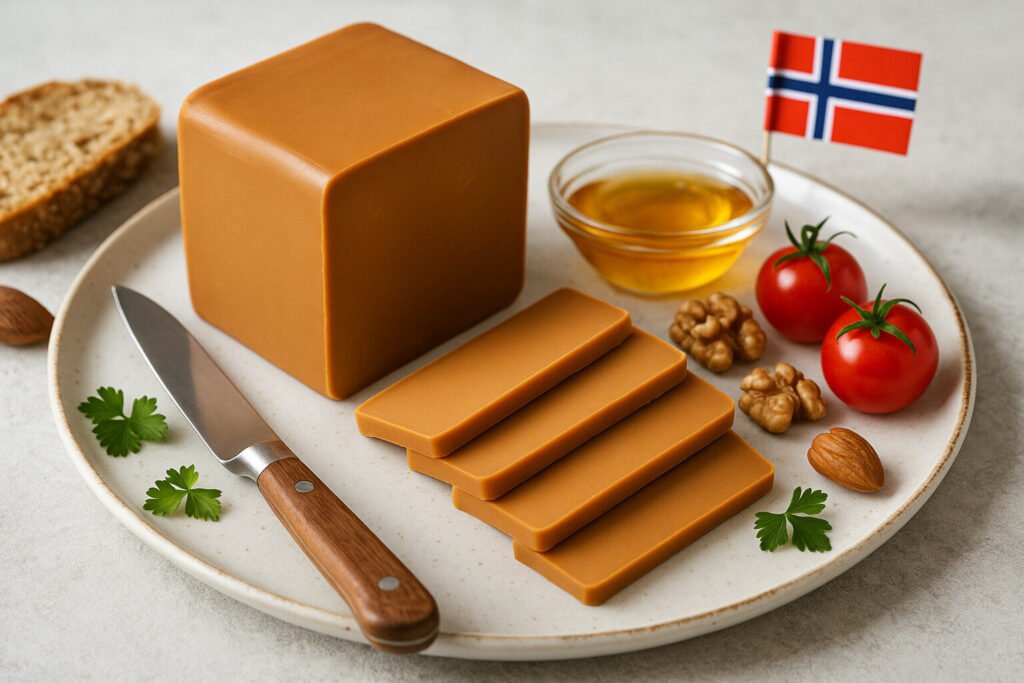
Norway’s Brunost, or ‘brown cheese,’ is multilayered with a truly unique savor that distinguishes it from all its cheese counterparts […]
Discovering Brunost Cheese from Norway Read More »
Caramelized cheese refers to cheeses that undergo controlled heating to develop browned, sweet, and nutty flavors. This technique transforms the cheese’s surface through Maillard reactions and sugar caramelization. The process creates a distinct category defined by its preparation method rather than milk type or aging.
These cheeses typically feature firm textures that withstand high heat without excessive melting. Common examples include baked cheeses, grilled cheese crusts, and torched cheese toppings. The caramelization process enhances both flavor complexity and visual appeal through golden-brown coloration.
Caramelization requires heating cheese surfaces to temperatures between 150-200°C using broilers, torches, or specialized ovens. Producers select cheeses with adequate fat and protein content to support browning reactions. The heating duration must be carefully controlled to prevent burning while achieving optimal flavor development.
Some cheeses undergo caramelization during final preparation rather than initial production. This includes restaurant dishes where cheeses are flambéed or broiled before serving. Industrial methods may use conveyor broilers for consistent caramelization of cheese portions.
Caramelized cheeses develop pronounced nutty, buttery, and toffee-like aromas. The process creates complex flavor compounds including furans and pyrazines. These cheeses typically exhibit reduced acidity and enhanced umami characteristics compared to their non-caramelized counterparts.
Textural changes include crisp exterior surfaces with creamy interiors in properly executed caramelization. The visual appearance features attractive golden-brown to dark amber crusts. Flavor intensity varies with caramelization degree, from lightly toasted to deeply caramelized profiles.
Caramelized cheese serves as both standalone appetizers and recipe components. Classic preparations include Spanish queso flameado and Greek saganaki. The technique enhances cheese boards by providing contrasting textures and intensified flavors.
These cheeses work particularly well in baked dishes, gratins, and melted sandwich applications. Caramelized cheese crusts add complexity to soups and vegetable dishes. Modern chefs use blowtorches to create precise caramelization on plated cheese presentations.
Halloumi from Cyprus demonstrates natural caramelization properties when pan-fried or grilled. Its high melting point allows surface browning while maintaining structure. Norwegian brunost represents a unique caramelized whey cheese with distinctive sweet-savory character.
French raclette involves scraping caramelized surface cheese onto accompaniments. Italian caciocavallo often develops caramelized notes when grilled over open flames. These regional specialties showcase how different cheese types respond to caramelization techniques.
Norway’s Brunost, or ‘brown cheese,’ is multilayered with a truly unique savor that distinguishes it from all its cheese counterparts […]
Discovering Brunost Cheese from Norway Read More »