
Queso de Latacunga – Ecuador’s Traditional Cheese
Discover Queso de Latacunga, a traditional Ecuadorian cheese known for its mild flavor and firm texture. Perfect for snacking or melting.
Queso de Latacunga – Ecuador’s Traditional Cheese Read More »
Cheese of the Andean Highlands refers to dairy products crafted in mountainous regions above 2,500 meters in South America. These cheeses are traditionally made from cow, sheep, or llama milk, adapting to high-altitude conditions. Their production methods preserve cultural heritage while meeting local dietary needs.
The scope includes fresh, semi-hard, and aged varieties unique to Peru, Bolivia, Ecuador, and Colombia. These cheeses often feature minimal industrialization, emphasizing artisanal techniques. They represent a distinct category within Latin American cheese taxonomy due to their environmental adaptations.
High-altitude cheesemaking utilizes raw or pasteurized milk from animals grazing on native pastures. Coagulation typically employs animal rennet, with curds pressed manually or using simple weights. The cool, dry mountain climate naturally aids the aging process without controlled humidity systems.
Traditional methods include brine salting and air-drying on wooden shelves. Production scales range from household-level operations to small community cooperatives. These techniques result in cheeses with distinctive textures and preservation qualities suited to highland conditions.
Andean Highland cheeses generally present mild to moderately sharp flavors with earthy undertones. Their texture varies from crumbly in fresh varieties to firm in aged specimens. The taste profile reflects the diverse native flora consumed by the dairy animals across different valleys.
These cheeses often exhibit slight saltiness and minimal acidity compared to lowland equivalents. Aroma notes range from milky and fresh in young cheeses to nutty in matured versions. The high-altitude environment contributes to their characteristic dense structure and complex flavor development.
Traditional Andean cuisine incorporates these cheeses into emblematic dishes like saltado and stuffed peppers. They serve as table cheeses, melting agents, and filling components in both savory and sweet preparations. Their structural properties make them suitable for grilling, frying, or baking.
Modern applications include gourmet sandwiches, cheese boards, and fusion cuisine adaptations. Their melting characteristics vary by age, with younger cheeses performing better for sauces. These versatile products maintain cultural significance while gaining international culinary recognition.
Peru produces Queso Andino, a semi-soft variety often used in sandwiches and traditional recipes. Bolivia’s Queso Chaqueño represents a firmer, saltier style commonly grated over soups and stews. Ecuador offers Queso de Hoja, characterized by its layered texture from leaf-wrapping during maturation.
Colombia contributes Queso Paipa, known for its elastic texture and buttery flavor profile. These regional variations demonstrate how microclimates and cultural preferences shape cheese characteristics. Each protected designation maintains specific production standards within its geographical indication.
Discover Queso de Latacunga, a traditional Ecuadorian cheese known for its mild flavor and firm texture. Perfect for snacking or melting.
Queso de Latacunga – Ecuador’s Traditional Cheese Read More »
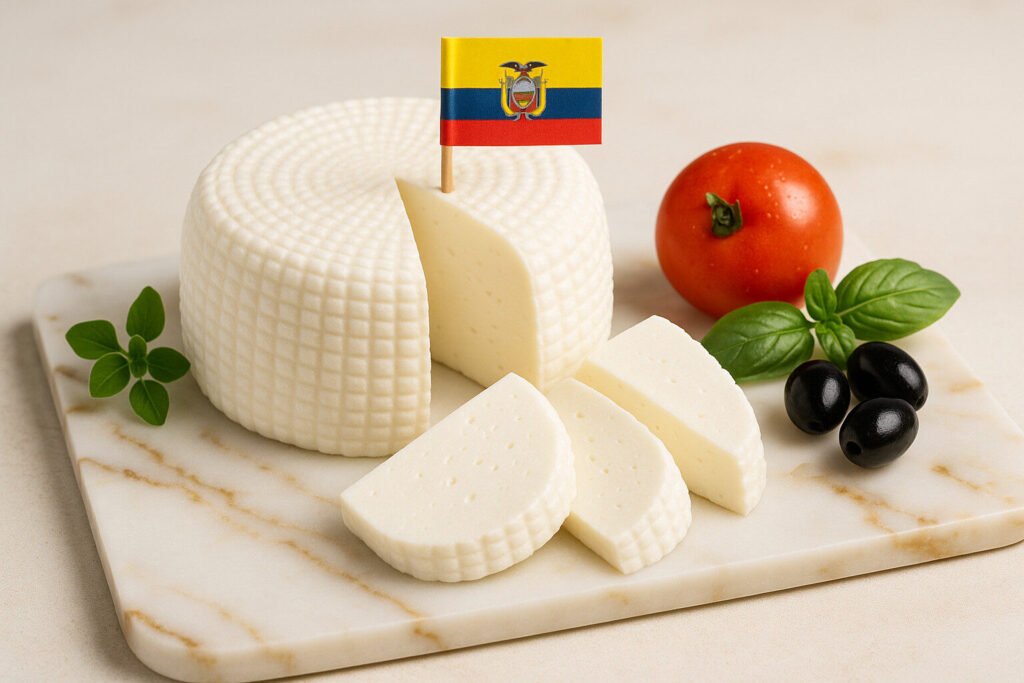
Discover Queso de Mano, Ecuador’s handcrafted cheese. Enjoy its mild flavor and versatile use in traditional dishes and snacks.
Queso de Mano – Ecuadorian Handmade Cheese Read More »