Cheese Of Serra Gaucha
Definition and Scope
Serra Gaúcha cheese originates from Brazil’s southern highlands, specifically the mountainous Serra Gaúcha region. This artisanal cheese belongs to the colonial cheese family, a category developed by European immigrants in southern Brazil. It is a semi-hard, pressed cheese traditionally made from raw cow’s milk.
The scope of Serra Gaúcha cheese is defined by its geographical indication and traditional production methods. It represents a specific style within Brazilian colonial cheeses, characterized by its unique terroir. This cheese is recognized for its cultural heritage and artisanal production techniques passed through generations.
Production Process
Production begins with raw cow’s milk, typically from pasture-grazed dairy herds. The milk undergoes natural fermentation using endogenous microflora before rennet addition for coagulation. The curd is cut, drained, and pressed into circular molds, then dry-salted or brined.
Aging occurs in controlled environments for periods ranging from 30 to 60 days. During maturation, the cheese develops its characteristic rind and internal texture. Traditional production maintains small-batch methods without industrial pasteurization or standardized starter cultures.
Sensory Profile
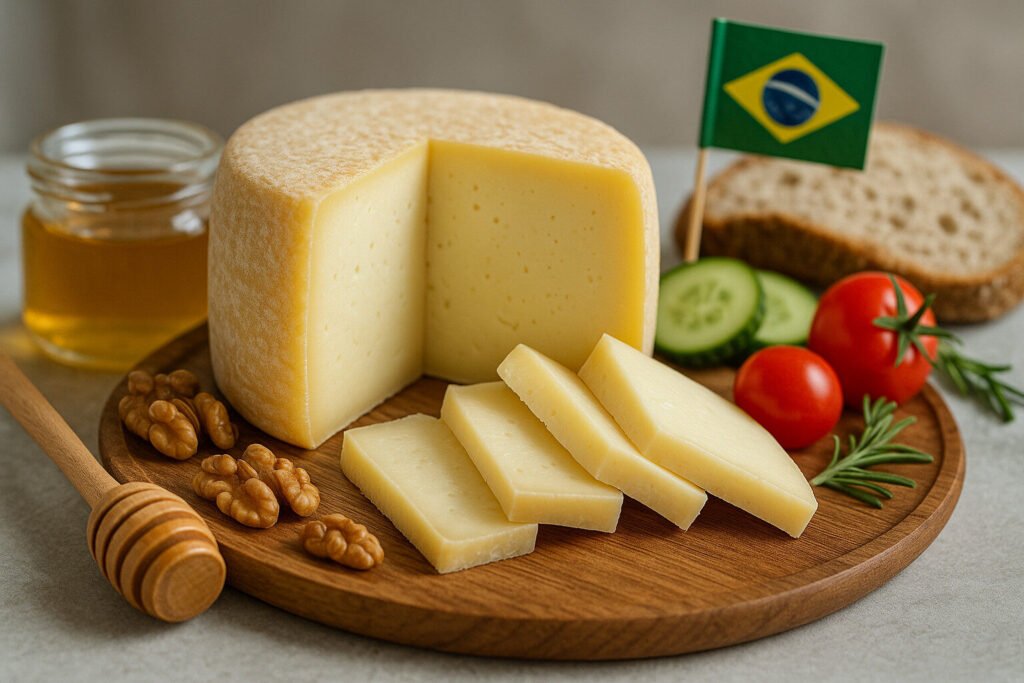
Serra Gaúcha cheese presents a pale yellow interior with a thin, natural rind. Its texture is semi-hard yet slightly elastic, showing minimal mechanical holes. The cheese offers a clean, milky aroma with subtle lactic notes characteristic of traditional farmstead production.
Flavor profiles range from mildly tangy to buttery with a balanced saltiness. As aging progresses, nutty and herbaceous notes may develop. The finish is typically clean with a pleasant acidity that reflects the region’s pasture-fed milk quality.
Culinary Applications
This cheese serves as both a table cheese and cooking ingredient in Brazilian cuisine. It melts well, making it suitable for traditional dishes like pão de queijo and polenta. Its balanced flavor profile allows it to complement rather than overpower other ingredients.
Serra Gaúcha cheese pairs excellently with regional wines, particularly Brazilian Merlot and Chardonnay. It appears on cheese boards alongside fruits like guava and persimmon. The cheese also enhances sandwiches and typical Brazilian breakfast fare.
Regional Context
Serra Gaúcha cheese production centers in Rio Grande do Sul state, particularly in cities like Canela and Gramado. This region’s cool climate and abundant pastures create ideal conditions for dairy farming. The cheese reflects the area’s strong Italian and German immigrant influences.
This cheese represents one of Brazil’s most recognized artisanal dairy products with growing protected designation status. It differs from other Brazilian cheeses like Queijo Minas through its specific production region and techniques. Serra Gaúcha cheese embodies the gastronomic identity of southern Brazil’s European-colonized highlands.