
Kalari – The Traditional Cheese of India
Discover Kalari, a traditional Indian cheese known for its unique texture and mild flavor. Perfect for grilling or snacking.
Kalari – The Traditional Cheese of India Read More »
Disc cheese refers to any cheese shaped into a flattened circular form during production. This shape is common across many styles and milk types, from soft fresh cheeses to aged hard varieties. The disc format aids in even ripening and facilitates traditional handling methods.
This category encompasses cheeses ranging from small individual portions to large wheels weighing over twenty kilograms. The classification is based purely on physical form rather than specific production methods or ingredients. Disc cheeses are found globally and represent a significant portion of both artisanal and industrial cheese production.
Disc cheese production begins with standard cheesemaking steps: milk coagulation, curd cutting, and whey drainage. The distinctive disc shape is achieved through molding and pressing stages where curds are formed into circular containers. Pressure application varies significantly depending on the desired cheese density and moisture content.
After molding, disc cheeses undergo specific aging protocols where the uniform shape promotes consistent moisture evaporation. The surface area to volume ratio inherent to disc shapes influences ripening dynamics significantly. Many traditional disc cheeses develop characteristic rinds through specific affinage techniques applied to their circular surfaces.
Disc cheeses exhibit diverse flavor profiles determined by their specific variety and aging duration. The shape contributes to uniform texture development throughout the cheese body. Common textural characteristics include consistent firmness from center to edge in properly aged specimens.
Aroma intensity often correlates with disc diameter and thickness due to surface area exposure. Smaller disc cheeses typically develop stronger flavors more rapidly than larger counterparts. The geometry allows for predictable flavor gradient development in many aged varieties, with more pronounced characteristics near the rind.
Disc cheeses serve numerous culinary functions based on their specific characteristics. Their uniform shape makes them ideal for presentation on cheese boards and for portion control in food service. The geometry facilitates consistent slicing and grating operations in both domestic and commercial settings.
Many disc cheeses perform particularly well in cooking applications where even melting is desired. Their structure supports various preparation methods including baking, frying, and grilling. The form factor also influences aging potential, making certain disc cheeses suitable for long-term storage and flavor development.
France produces numerous notable disc cheeses including Camembert and Brie, both characterized by their distinctive white mold rinds. These soft-ripened varieties typically measure 10-30 centimeters in diameter and develop creamy textures. Their disc shape is essential to the traditional ripening process that creates their signature flavor profile.
Italian Parmigiano-Reggiano represents a hard disc cheese tradition, with wheels averaging 35-45 centimeters in diameter. English Cheddar often appears in disc form, with cloth-bound varieties developing complex flavors during extended aging. These examples demonstrate how disc shaping accommodates diverse cheesemaking traditions across Europe.
Discover Kalari, a traditional Indian cheese known for its unique texture and mild flavor. Perfect for grilling or snacking.
Kalari – The Traditional Cheese of India Read More »
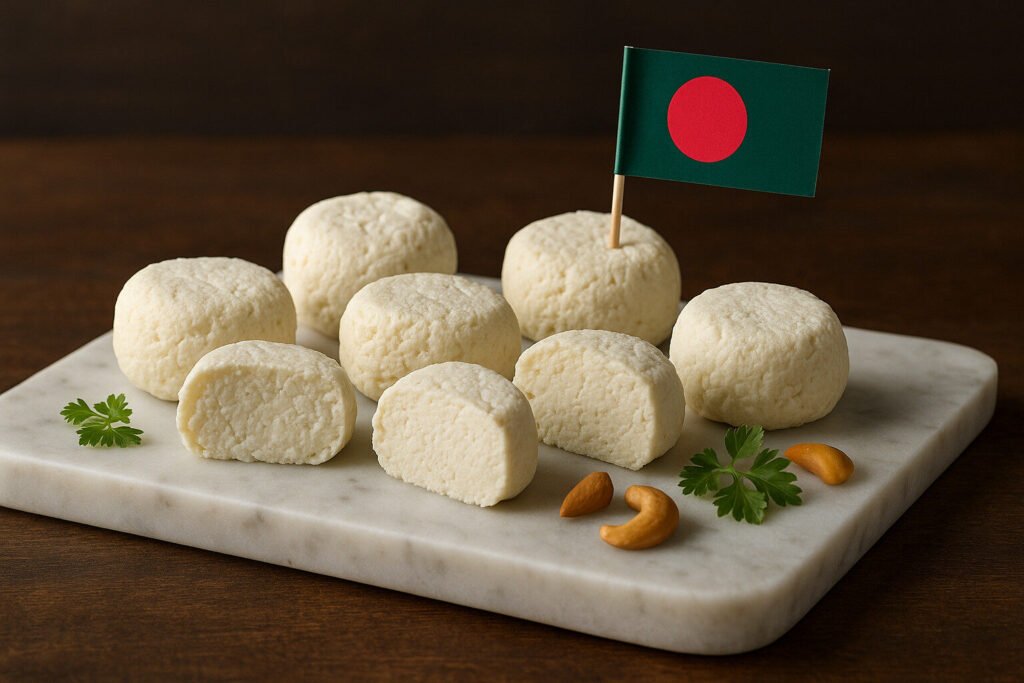
Discover Bandel Cheese from Bangladesh: a unique, crumbly, and smoky cheese perfect for salads, snacks, and authentic Bengali dishes.
Bandel Cheese – A Bangladeshi Dairy Delicacy Read More »