
Discovering Brunost Cheese from Norway
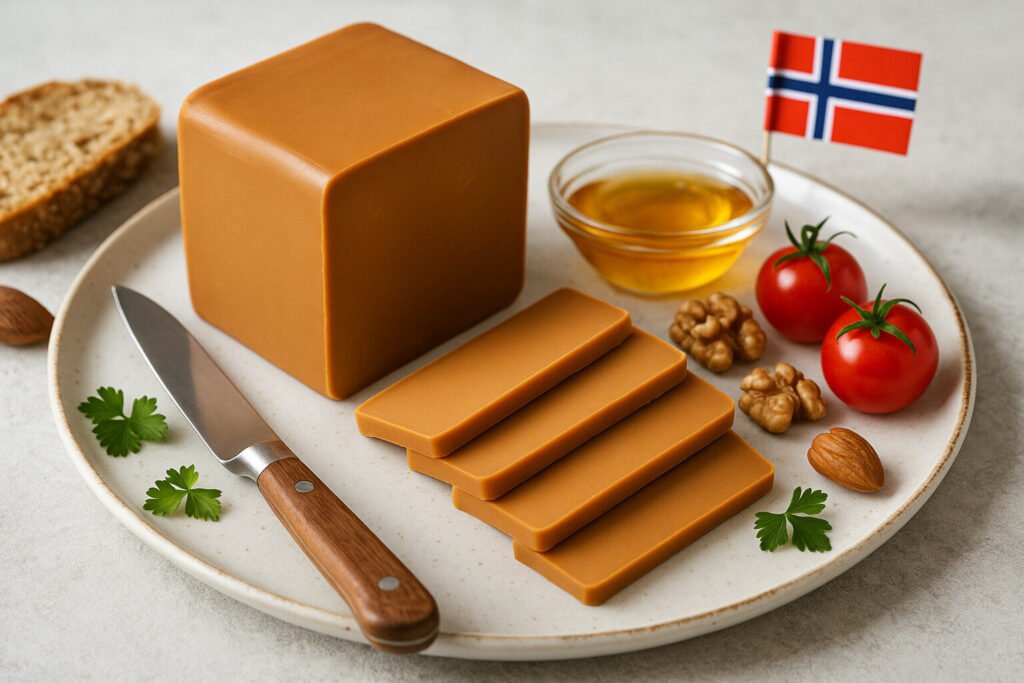
Norway’s Brunost, or ‘brown cheese,’ is multilayered with a truly unique savor that distinguishes it from all its cheese counterparts […]
Discovering Brunost Cheese from Norway Read More »
Fudgy cheese describes a textural category characterized by dense, smooth, and pliable paste. This consistency is achieved through specific moisture and fat content levels, often found in young, high-moisture cheeses. The term is primarily a descriptive quality rather than a formal classification within cheese taxonomy.
Cheeses exhibiting a fudgy texture are typically uncooked and lightly pressed during production. This style includes varieties like young Gouda, certain Havarti, and some soft-ripened cheeses. The texture provides a distinct mouthfeel that is creamy yet firm, differentiating it from crumbly or hard cheeses.
Producing a fudgy cheese requires careful control of curd washing and pressing. The curds are often cut into larger pieces to retain whey, increasing the final moisture content. This high moisture level is essential for developing the characteristic dense and smooth texture after pressing.
Aging periods for fudgy cheeses are typically brief, ranging from a few weeks to several months. The cheeses are usually aged in controlled humidity environments to prevent rind formation and moisture loss. This minimal aging preserves the pliable, homogeneous paste that defines the fudgy quality.
The flavor profile of fudgy cheeses is generally mild, buttery, and milky due to their youth. They lack the crystalline texture and sharpness of aged cheeses, offering instead a clean, lactic sweetness. The primary sensory characteristic is the smooth, yielding texture that melts evenly in the mouth.
Aromas are typically fresh and dairy-forward, with notes of cultured cream and sweet grass. The paste should show no signs of brittleness or dryness when cut. The color is often a pale ivory to light yellow, depending on the milk source and any added annatto coloring.
Fudgy cheeses excel in melting applications, making them ideal for grilled cheese sandwiches, cheese sauces, and fondues. Their pliable texture allows for easy slicing and cubing without crumbling. This makes them excellent for cheese boards where a smooth, spreadable consistency is desired.
They pair well with fresh fruits like apples and pears, and complement light beers and crisp white wines. Their mild flavor profile makes them versatile for cooking without overpowering other ingredients. They are particularly valued in applications where consistent melt and creamy texture are paramount.
Young Gouda from the Netherlands represents a classic fudgy cheese, with its smooth, yellow paste and mild flavor. French Saint-Nectaire, when young, develops a distinctly fudgy texture beneath its washed rind. These cheeses demonstrate how production methods and aging create this specific textural quality.
American Havarti and some young Cheddars can also exhibit fudgy characteristics when produced with higher moisture content. Italian Crescenza is another prime example, known for its exceptionally soft, spreadable texture. These regional varieties show the diversity of cheeses that can achieve the fudgy texture profile.
Norway’s Brunost, or ‘brown cheese,’ is multilayered with a truly unique savor that distinguishes it from all its cheese counterparts […]
Discovering Brunost Cheese from Norway Read More »