
Discovering Savinjski Sir cheese of Slovenia
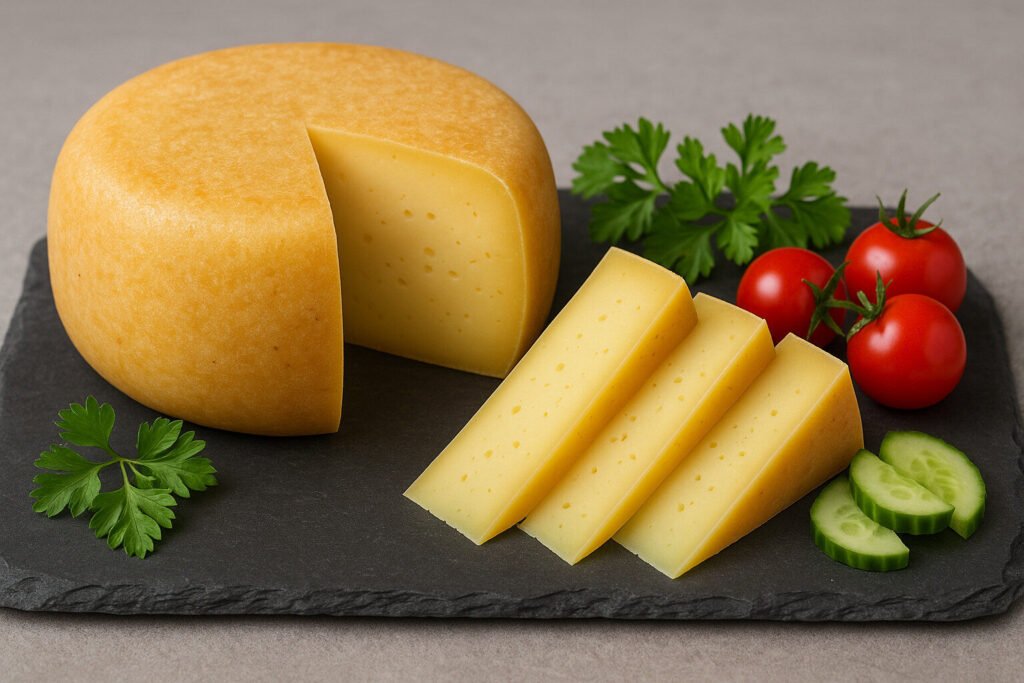
Savinjski Sir, popularly recognized as cheese from the Savinja Valley, is the epitome of Slovenia’s distinguished dairy culture. Revered for […]
Discovering Savinjski Sir cheese of Slovenia Read More »
Irregular holes cheese refers to varieties with unevenly distributed cavities formed during fermentation. These openings result from specific bacterial cultures producing carbon dioxide gas trapped within the curd matrix. The category excludes mechanically pierced cheeses and those with uniform eye formation.
This classification encompasses diverse milk types including cow, goat, and sheep varieties. Notable examples range from semi-soft to hard textures with aging periods from weeks to years. The irregular hole characteristic serves as a key differentiator in cheese taxonomy and consumer identification.
Manufacturers introduce particular strains of propionic acid bacteria alongside traditional starter cultures during cheese making. These bacteria metabolize lactate into carbon dioxide gas during the warm room fermentation stage. The gas becomes trapped where curd particles fail to knit completely together.
Cheese makers control hole formation through precise temperature regulation during affinage. Higher temperatures accelerate gas production while lower temperatures slow development. The final distribution pattern depends on curd handling techniques and moisture content at molding.
These cheeses typically present nutty, buttery flavors with varying degrees of sweetness. The irregular cavities contribute to a distinctive crumbling or elastic texture depending on moisture content. Aging duration significantly influences flavor intensity from mild to robust profiles.
Aromatic compounds include diacetyl and propionic acid derivatives that create complex bouquets. The visual appearance features random hole patterns ranging from tiny specks to large caverns. Texture variations occur between the solid matrix and air pocket interfaces during mastication.
Irregular holes cheeses perform well in both cold preparations and cooked dishes due to their melting properties. Their structural integrity makes them suitable for cheese plates while their flavor release enhances sauces. The visual appeal adds aesthetic value to composed salads and sandwiches.
These varieties complement fruits, nuts, and crusty breads in charcuterie arrangements. Cooking applications include gratins, fondues, and stuffed pastas where even melting is desirable. The flavor concentration allows for economical usage in culinary preparations.
Switzerland produces Emmentaler featuring walnut-sized irregular holes and a distinctive mild flavor. French Morbier displays a characteristic ash line and medium-sized random openings. These traditional varieties maintain protected designation of origin status with specific production requirements.
American artisanal producers have developed interpretations using local milk sources and adapted techniques. Italian Montasio exhibits smaller irregular holes when aged beyond four months. Global variations demonstrate how terroir and technique influence hole formation patterns.
Savinjski Sir, popularly recognized as cheese from the Savinja Valley, is the epitome of Slovenia’s distinguished dairy culture. Revered for […]
Discovering Savinjski Sir cheese of Slovenia Read More »