
Jibneh Baida: A Classic White Cheese from Iraq
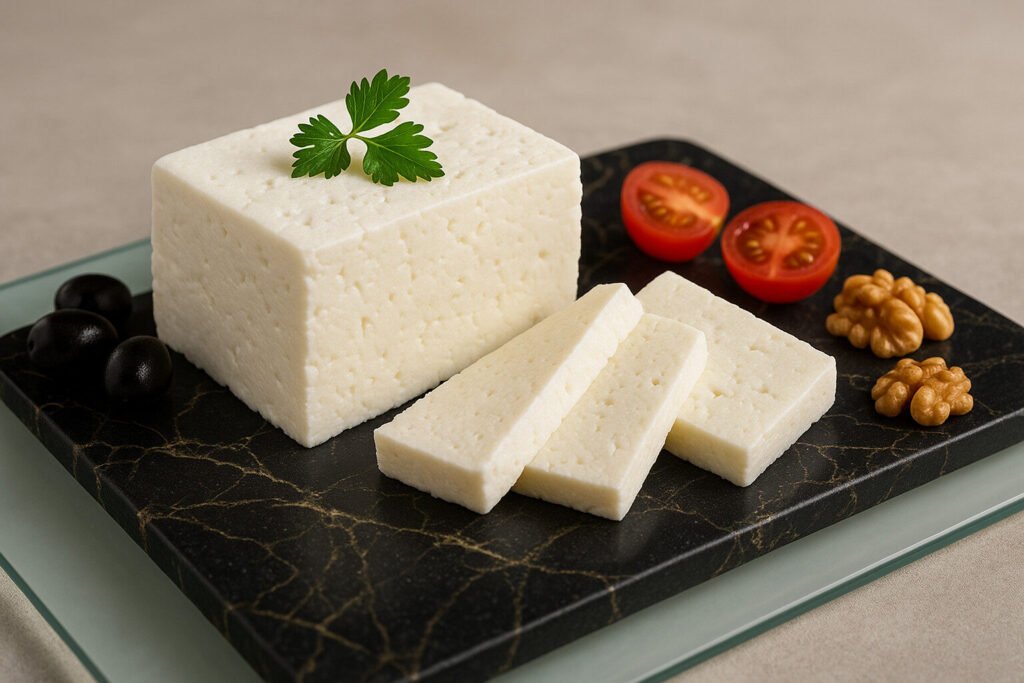
Discover Jibneh Baida, a fresh white cheese from Iraq. Enjoy its mild, salty flavor in salads, sandwiches, or as a table cheese.
Jibneh Baida: A Classic White Cheese from Iraq Read More »
Moderate saltiness cheese refers to varieties with salt content between 1.5% and 2.5% of total weight. This category excludes intensely salted cheeses like feta and lightly salted fresh cheeses. The salt level significantly influences texture, preservation, and flavor development without dominating the palate.
These cheeses span multiple milk types including cow, goat, and sheep varieties. Moderate salinity appears across aging categories from semi-soft to hard cheeses. This balance makes them particularly versatile for both standalone consumption and culinary applications.
Salt incorporation occurs through brining, surface salting, or direct addition to curds. Brining times typically range from several hours to two days depending on cheese size. The salt concentration in brine solutions generally falls between 18-22% for moderate saltiness cheeses.
Aging conditions further modify salt perception as flavors develop. Humidity control during aging prevents excessive moisture loss that would concentrate saltiness. Proper salt distribution ensures consistent flavor profile throughout the cheese wheel or block.
Moderate saltiness enhances other flavor components without overwhelming them. The salt acts as a flavor catalyst, brightening dairy notes and supporting umami characteristics. Texture ranges from supple to firm depending on moisture content and aging duration.
These cheeses typically exhibit balanced acidity and subtle mineral notes. The salt level provides sufficient preservation for complex flavor development during aging. Finish is clean without lingering salty aftertaste common in high-salt varieties.
Moderate saltiness cheeses perform well in cooked dishes where they contribute flavor without making preparations overly salty. They melt consistently in sauces and gratins while maintaining structural integrity. Their balanced profile complements rather than dominates other ingredients.
These cheeses pair effectively with both red and white wines that have moderate acidity. They work well on cheese boards alongside fruits and nuts. The versatility makes them suitable for sandwiches, salads, and baked preparations.
Gouda from the Netherlands typically falls within moderate saltiness parameters, especially at medium aging. French Tomme de Savoie exhibits characteristic moderate salinity with its natural rind. These traditional examples demonstrate how regional techniques achieve balanced salt content.
English Cheshire cheese maintains moderate saltiness through its crumbly texture. Italian Fontina Val d’Aosta represents Alpine-style cheeses with controlled salt levels. These geographically protected products showcase how terroir influences salt integration in cheese making.
Discover Jibneh Baida, a fresh white cheese from Iraq. Enjoy its mild, salty flavor in salads, sandwiches, or as a table cheese.
Jibneh Baida: A Classic White Cheese from Iraq Read More »