
Kefalotyri Cheese from Cyprus: A Salty Delight
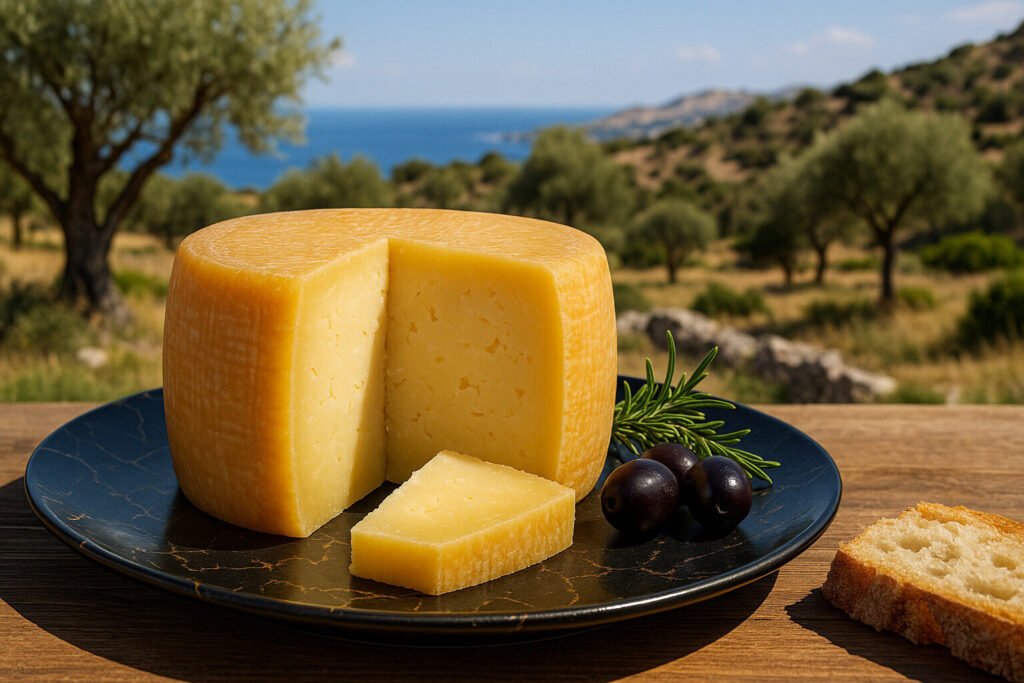
Discover Kefalotyri, a hard, salty cheese from Cyprus. Perfect for grating over pasta or frying for saganaki. A bold, traditional flavor.
Kefalotyri Cheese from Cyprus: A Salty Delight Read More »
Saganaki refers to a preparation method for cheese in Greek cuisine, not a specific cheese variety. The term describes cheese that is coated in flour and pan-fried until golden and molten. This technique is traditionally applied to semi-hard, brined cheeses with high melting points.
Kefalotyri and Kasseri are the most common cheeses used for this dish. The scope is defined by the cooking process, which creates a crispy exterior and a soft, stringy interior. It is a distinct category based on culinary application rather than production method.
The production of saganaki begins with selecting an appropriate cheese block, typically sliced into half-inch thick portions. The cheese slices are lightly dredged in all-purpose flour, which helps form a crust during frying. No additional batter or breading is used in the traditional method.
The cheese is then fried in a small pan, often with a small amount of olive oil or butter, over medium-high heat. It is cooked for one to two minutes per side until a golden-brown crust forms. The cheese must be served immediately to preserve its characteristic molten texture.
Saganaki offers a pronounced savory and salty flavor profile, derived from the brined cheeses used. The frying process creates a contrasting texture between a crisp, browned exterior and a soft, elastic interior. Aromatic notes are often enhanced with a squeeze of fresh lemon juice before serving.
The dish has a rich, mouth-coating quality due to the released fats from the melted cheese. Its aroma is intensely savory with buttery and sometimes slightly pungent notes, depending on the cheese variety. The overall sensory experience is one of immediate, warm, and salty indulgence.
Saganaki is primarily served as a hot appetizer or meze in Greek restaurants and homes. It is often presented flambéed, where brandy or ouzo is ignited tableside for dramatic effect. The dish is typically accompanied by bread to soak up the melted cheese and flavorful oils.
Beyond its traditional role, modern interpretations sometimes incorporate saganaki into sandwiches or as a topping for salads. The key to its use is immediate consumption while the cheese retains its molten state. It pairs exceptionally well with crisp, acidic white wines that cut through its richness.
In Greece, saganaki preparation is most associated with the cheeses produced in specific regions. Kefalotyri, a hard salty cheese from Crete and the mainland, provides a robust flavor and excellent melting properties. Kasseri, a protected designation of origin cheese, is another popular choice from various Greek regions.
Outside Greece, similar preparations exist in other Mediterranean cuisines, though under different names. Turkish restaurants may offer a comparable dish using Kasar cheese. The specific combination of cheese variety and cooking technique makes Greek saganaki a distinctive culinary tradition.
Discover Kefalotyri, a hard, salty cheese from Cyprus. Perfect for grating over pasta or frying for saganaki. A bold, traditional flavor.
Kefalotyri Cheese from Cyprus: A Salty Delight Read More »

Discover Graviera cheese, a Greek favorite known for its sweet, nutty flavor and firm texture. Perfect for snacking, grating, or grilling.
Graviera – Internationally Popular Read More »

Discover Kefalograviera, a firm, salty sheep’s milk cheese from Cyprus, perfect for grilling, grating, or enjoying with fruit.
Kefalograviera Cheese from Cyprus: A Salty Mediterranian Delight Read More »