
Discovering Zlatograd Cheese of Bulgaria
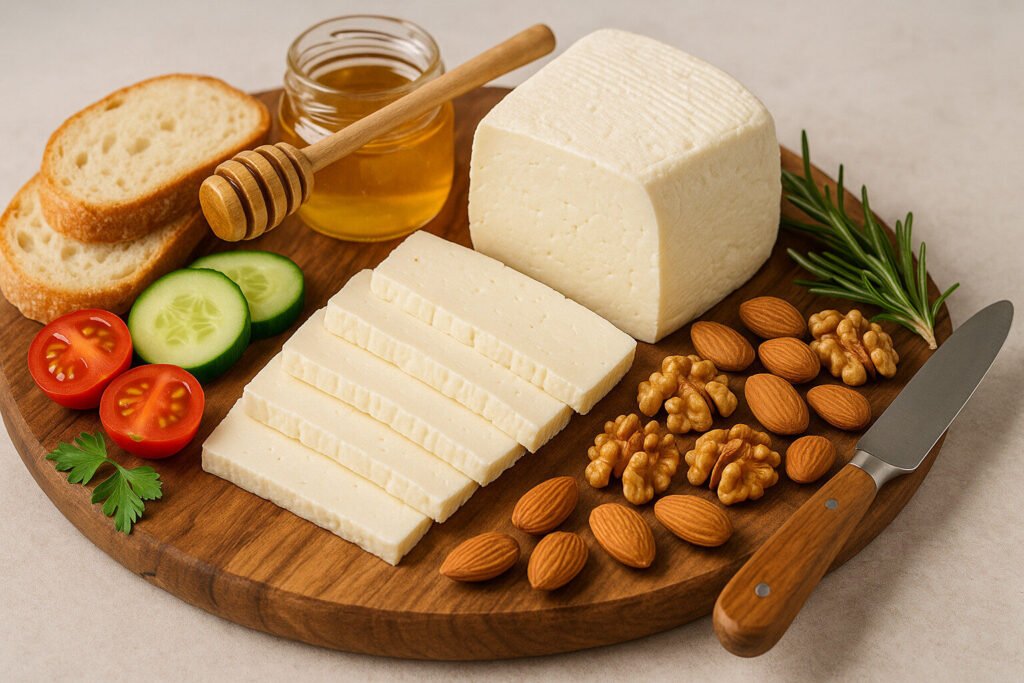
Zlatograd Cheese is a marvelous dairy jewel that hails from the mountainous region of Zlatograd in Bulgaria. Symbolic of its […]
Discovering Zlatograd Cheese of Bulgaria Read More »
Slightly elastic cheese refers to varieties that exhibit a moderate degree of stretch and springiness when manipulated. This textural property results from specific protein structures formed during production. The category includes cheeses like young Gouda, Havarti, and some semi-soft types.
Elasticity in cheese is measured by its ability to return toward original shape after deformation. Slightly elastic cheeses fall between non-elastic fresh cheeses and highly elastic pasta filata types. This property significantly influences slicing behavior and mouthfeel perception during consumption.
Controlled acid development during cheesemaking creates the calcium bridges that enable slight elasticity. Manufacturers achieve this through specific starter cultures and careful pH monitoring throughout the process. The curd is typically cooked at moderate temperatures between 35-40°C.
Mechanical working of the curd during manufacturing aligns protein matrices to create elastic potential. Pressing times are shorter than for hard cheeses but longer than fresh varieties. Final elasticity develops during the aging period as proteins continue to reorganize.
Slightly elastic cheeses offer a gentle resistance when bitten, followed by clean breakdown. They typically lack the stringiness of highly elastic cheeses while providing more substance than crumbly varieties. The texture complements rather than dominates the tasting experience.
Flavor release occurs gradually as the cheese yields to mastication. This controlled breakdown allows nuanced flavor perception without textural interference. The mouthfeel is often described as smooth with a pleasant, mild springiness.
These cheeses perform well in sandwiches and cold preparations where clean slicing is required. Their moderate melt characteristics make them suitable for baked dishes without excessive oil separation. They maintain structural integrity when heated to moderate temperatures.
In food service, slightly elastic cheeses are valued for their consistent performance across applications. They provide adequate binding in cooked dishes while remaining sliceable when cold. Their balanced texture makes them versatile ingredients in both hot and cold culinary contexts.
Dutch cheeses like young Gouda and Edam exemplify the slightly elastic category. These traditionally feature a smooth, yielding texture that distinguishes them from harder aged varieties. Their production methods have been refined over centuries to achieve consistent elastic properties.
Scandinavian cheeses such as Havarti and Jarlsberg demonstrate slight elasticity with distinctive flavor profiles. French Saint-Paulin and German Tilsiter also belong to this textural category. Each regional variety adapts the elastic characteristic to local taste preferences and production traditions.
Zlatograd Cheese is a marvelous dairy jewel that hails from the mountainous region of Zlatograd in Bulgaria. Symbolic of its […]
Discovering Zlatograd Cheese of Bulgaria Read More »