
Asiago Cheese – A Global Guide
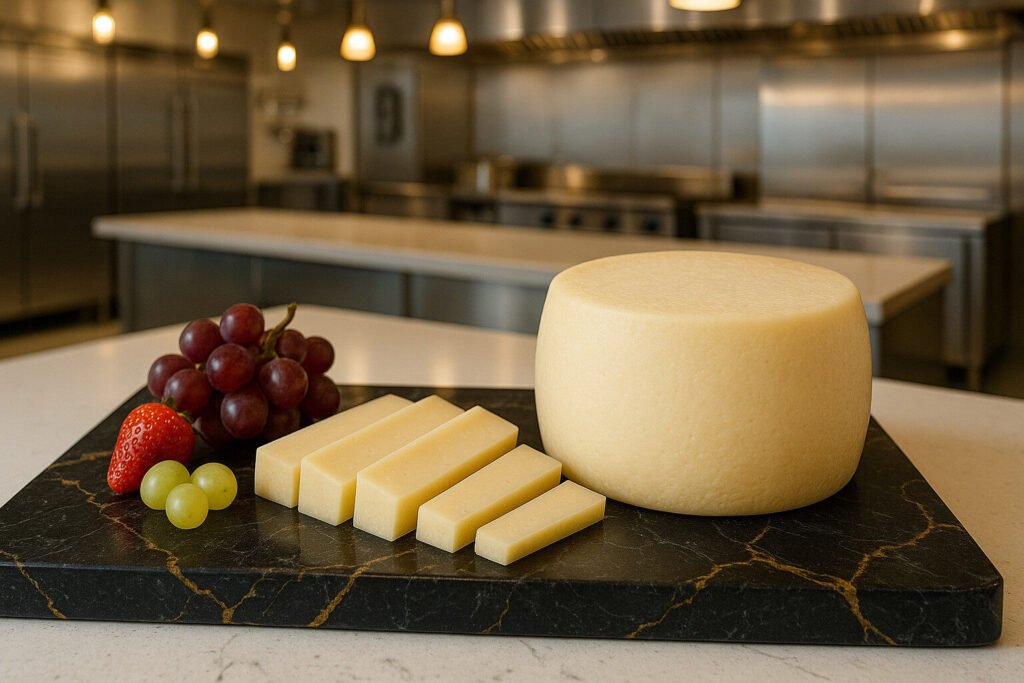
Discover International Asiago cheese, a versatile Italian favorite perfect for grating, snacking, and elevating your meals with rich flavor.
Asiago Cheese – A Global Guide Read More »
Straw yellow hue cheese refers to cheeses exhibiting a pale golden color reminiscent of dried straw. This coloration primarily results from milk’s natural beta-carotene content, which is retained during production. The hue serves as a visual indicator of milk type and production methods, distinguishing these varieties from white or orange cheeses.
This category spans multiple cheese families including many semi-hard and hard varieties. It excludes artificially colored cheeses and those with naturally white or deep orange pigmentation. The classification helps consumers identify cheeses with similar visual characteristics across different aging periods and milk sources.
Straw yellow coloration develops through careful control of milk composition and processing techniques. Full-fat milk from grass-fed animals provides the necessary beta-carotene precursors that create this natural pigmentation. The color intensifies during aging as moisture evaporates and compounds concentrate.
Manufacturers avoid bleaching or whitening treatments that would diminish the characteristic hue. Specific production parameters including temperature control and pressing methods help preserve the natural pigments. The resulting color remains stable throughout the cheese’s shelf life when properly stored.
Visually, these cheeses present a consistent pale yellow throughout their paste without blotchiness or discoloration. The color typically appears uniform from rind to core in properly made specimens. This visual characteristic often correlates with specific texture and flavor developments.
Beyond appearance, straw yellow cheeses frequently exhibit balanced flavor profiles with nutty or buttery notes. Their textures range from semi-firm to hard depending on moisture content and aging duration. The visual hue provides initial cues about the cheese’s potential taste characteristics before consumption.
Straw yellow hue cheeses perform well in both raw and cooked preparations due to their structural integrity. Their appealing color makes them particularly suitable for cheese boards and visual presentations where appearance matters. The hue remains stable when heated, making these varieties reliable for cooking applications.
These cheeses often feature in sandwiches, salads, and baked dishes where their color provides visual contrast. Many melt evenly while maintaining their characteristic golden tone. Their visual appeal makes them popular choices for professional plating and food photography.
Classic European examples include many Alpine varieties like Gruyère and Comté that develop their straw yellow color through traditional aging. These cheeses typically use raw milk from specific regional breeds that graze on alpine pastures. Their coloration reflects the terroir and traditional production methods.
New World interpretations include certain American artisanal cheeses that replicate European techniques. These might include farmstead cheddars and similar styles aged to develop natural golden tones. The hue serves as a marker of quality and traditional craftsmanship across different cheesemaking regions.
Discover International Asiago cheese, a versatile Italian favorite perfect for grating, snacking, and elevating your meals with rich flavor.
Asiago Cheese – A Global Guide Read More »