
Discovering Brunost Cheese from Norway
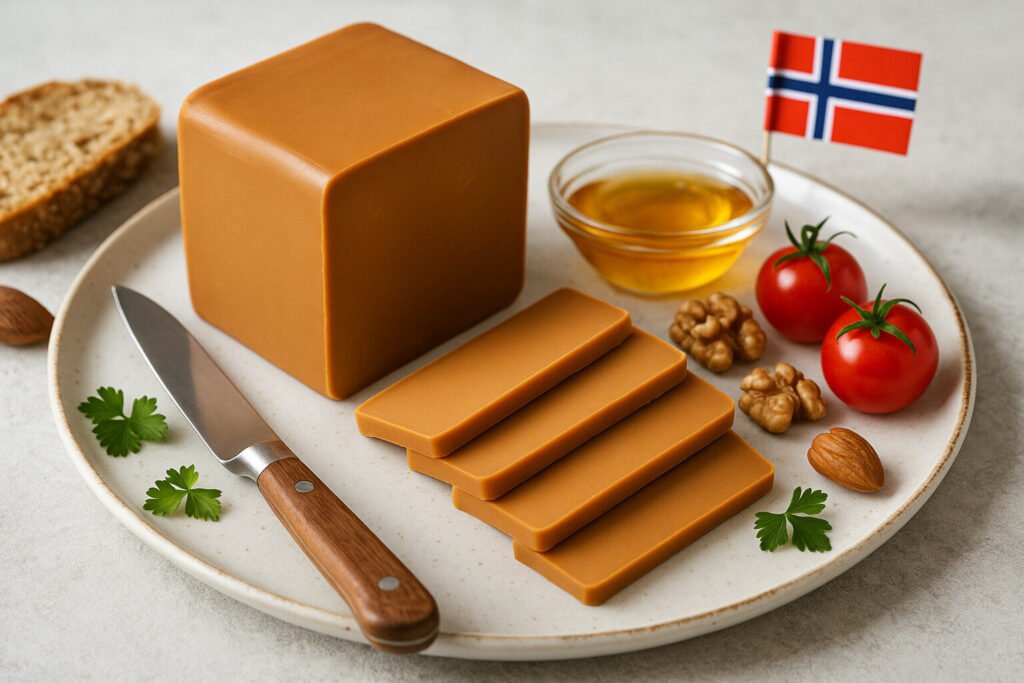
Norway’s Brunost, or ‘brown cheese,’ is multilayered with a truly unique savor that distinguishes it from all its cheese counterparts […]
Discovering Brunost Cheese from Norway Read More »
Sweet tangy cheese describes a category defined by its balanced flavor profile combining residual sugar notes with lactic acidity. These cheeses typically exhibit moderate moisture content and range from semi-soft to firm textures. The classification spans multiple milk types and production methods while maintaining this distinctive taste characteristic.
This category includes varieties like Mimolette, some Goudas, and certain cheddars with pronounced caramel notes. Scope extends to cheeses developing sweetness through aging or specific bacterial cultures. The style represents a deliberate intersection of flavor development pathways in cheesemaking.
Producers achieve sweetness through controlled lactose retention or development of sweet compounds during aging. Tangy notes originate from specific starter cultures like Lactococcus lactis that produce lactic acid. Temperature control during fermentation directly impacts the balance between sweet and acidic flavors.
Many sweet tangy cheeses undergo a washed-curd process to remove excess acidity. Aging periods from three months to several years allow for Maillard reaction development. Some varieties incorporate cream enrichment or specific aging environments to enhance caramelization.
The aroma typically presents buttery notes with hints of cultured cream and toasted nuts. Tangy elements manifest as bright, clean acidity that cleanses the palate. Sweet components range from mild lactose sweetness to developed caramel and butterscotch notes.
Texture varies from pliable and smooth in younger versions to crystalline and firm in aged examples. The finish balances lingering sweetness with a refreshing acidic tang. Mouthfeel often includes a slight oiliness that carries flavor compounds effectively.
These cheeses perform well both as table cheeses and in cooked applications. Their balanced flavor profile makes them excellent melting cheeses for sandwiches and gratins. The sweetness complements fruit pairings while the acidity cuts through rich ingredients.
In professional kitchens, they work particularly well in cheese sauces and fondues. The tangy component helps balance sweet elements in dessert preparations. They maintain structural integrity when heated, making them suitable for baked dishes.
French Mimolette develops orange hues and caramel notes through extended aging. Dutch Gouda, particularly the aged varieties, exhibits butterscotch sweetness with balanced acidity. English Cheshire cheese often displays both salty and sweet notes with a distinctive tang.
Italian Piave Vecchio offers a sweet, nutty profile with sharp acidic finish. American aged cheddars frequently develop crystalline textures and pronounced caramel flavors. These regional variations demonstrate how terroir and technique influence the sweet-tangy spectrum.
Norway’s Brunost, or ‘brown cheese,’ is multilayered with a truly unique savor that distinguishes it from all its cheese counterparts […]
Discovering Brunost Cheese from Norway Read More »