
In this article
Cheese Varieties: Tazart n’Tlata
Tazart n’Tlata is primarily produced in a single, traditional style. It is a pressed, uncooked cheese that undergoes a relatively short aging period. The cheese is typically formed into small, rustic wheels or blocks.
Variations can occur based on the specific ratio of milks used by each producer. Some versions might have a slightly more pronounced goat or sheep milk character. The cheese does not have officially recognized sub varieties, preserving its artisanal authenticity.
History of Tazart n’Tlata
Tazart n’Tlata has deep roots in the pastoral traditions of the Kabylie and Aures mountain regions. It was historically made by nomadic and semi-nomadic herders. These herders developed the cheese as a way to preserve the milk from their mixed flocks.
The practice dates back generations and is a cherished part of local food culture. Production was traditionally a family affair, with knowledge passed down orally. Today, it remains a symbol of Algerian rural heritage and self-sufficiency.
Distinctive Features of Tazart n’Tlata
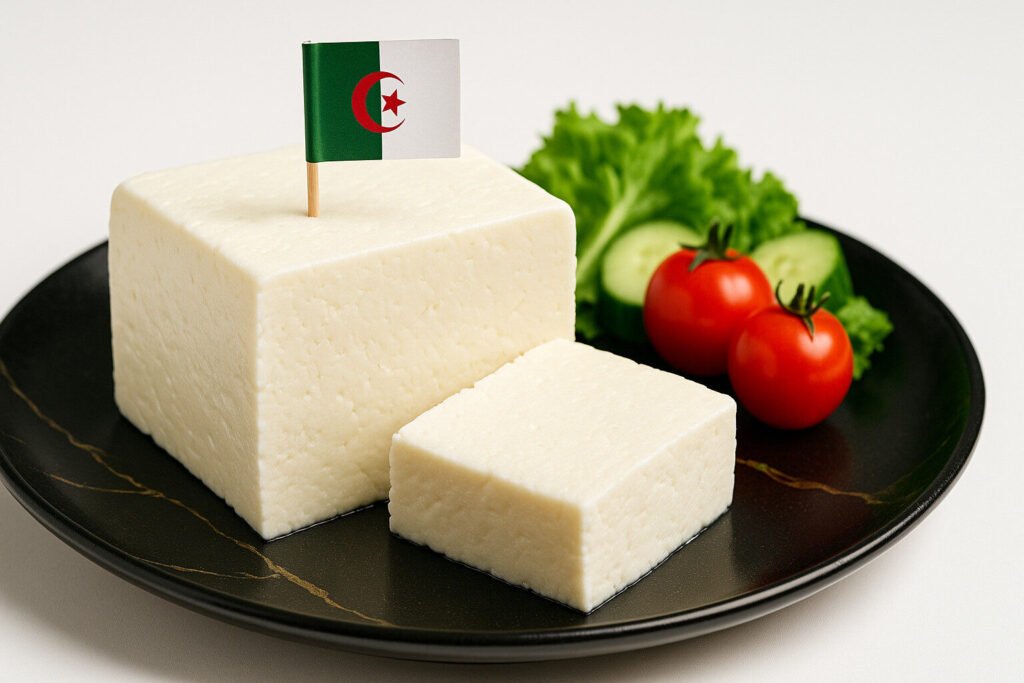
Tazart n’Tlata is instantly recognizable by its firm yet slightly crumbly texture. The paste is off-white to pale yellow, often with small, irregular eyes. Its rind is natural, thin, and bears the imprint of the traditional woven baskets used for molding.
The aroma is lactic and earthy, with hints of the mountain grasses and herbs consumed by the animals. Its flavor is a remarkable balance of tangy, salty, and nutty notes. The finish is clean and slightly peppery, a signature of the blended milks.
Production Process for Tazart n’Tlata
The production of Tazart n’Tlata begins with the careful milking of goats, sheep, and sometimes cows. The fresh milk is warmed gently in a large copper or enameled pot. Natural rennet, often from a lamb or kid, is added to coagulate the milk.
The curd is cut by hand into small pieces and then lightly pressed in baskets to drain the whey. The young cheeses are dry-salted over several days. They are then aged for a period of three to eight weeks in cool, humid cellars or caves.
Traditions
Tazart n’Tlata is deeply entwined with the social and culinary traditions of its region. It is a staple during important family gatherings and religious festivals. The cheese is often presented as a gift, symbolizing hospitality and generosity.
Its making is a seasonal activity, peaking in the spring when the animals graze on fresh, aromatic pastures. The knowledge of its production is a point of pride and a marker of cultural identity. It represents a sustainable use of resources from a mixed farming system.
Local Wine or Beverage Pairings
Tazart n’Tlata pairs wonderfully with a variety of local Algerian beverages. A light, dry red wine from the Medea region complements its salty tang and earthy notes. The wine’s acidity cuts through the richness of the cheese beautifully.
For a non alcoholic pairing, a glass of chilled Lben, a fermented buttermilk, is a classic and refreshing choice. Mint tea, a cornerstone of Maghrebi hospitality, also makes a surprisingly good partner. The sweetness of the tea contrasts nicely with the cheese’s savory character.
Suitable Fruit and Vegetables
Fresh figs are an exceptional companion for Tazart n’Tlata. Their honeyed sweetness and soft texture provide a perfect contrast to the salty, crumbly cheese. Ripe pears and crisp apples also work very well.
For vegetables, try serving it with roasted bell peppers or grilled eggplant. The smoky sweetness of these vegetables enhances the cheese’s earthy undertones. A simple salad of tomatoes, cucumber, and red onion also makes a fresh, bright accompaniment.
Suitable Meat and Fish
Tazart n’Tlata can be crumbled over grilled lamb chops or merguez sausages. The cheese melts slightly from the heat, adding a creamy, salty dimension to the meat. It also works well in stuffings for poultry or rolled into meatballs.
While less common, it can be paired with firm, white fish. Try baking a whole sea bass with slices of lemon and herbs, then topping it with crumbled Tazart n’Tlata just before serving. The cheese adds a savory crust that complements the delicate fish.
Recipe Ideas
Grate 150 grams of aged Tazart n’Tlata and fold it into a simple batter of 200 grams of semolina flour for a savory twist on Algerian Harcha. Cook the rounds on a lightly oiled griddle over medium heat for 4-5 minutes per side until they develop a beautiful golden-brown crust. The finished patties offer a delightful contrast between the crispy exterior and the soft, melting pockets of salty, tangy cheese.
Create a robust pasta dish by tossing 250 grams of hot rigatoni with a sauce made from caramelized onions, spicy Merguez sausage, and 100 grams of crumbled Tazart n’Tlata. The residual heat from the pasta perfectly melts the cheese into a creamy, flavorful coating that clings to every piece. Finish the dish with a generous handful of fresh parsley to add a bright, herbal note that complements the cheese’s distinct sharpness.
Tazart n’Tlata and Herb Stuffed Medjool Dates
This recipe transforms simple ingredients into an elegant and flavorful appetizer. The natural sweetness of Medjool dates creates a wonderful contrast with the salty, tangy cheese. Fresh herbs like mint or parsley add a burst of freshness that ties everything together.
These stuffed dates are incredibly easy to assemble, making them perfect for last minute entertaining. They can be served at room temperature, allowing the flavors to meld beautifully. This dish is a modern take on traditional North African flavor combinations.
- 12 large Medjool dates, pitted
- 100 g Tazart n’Tlata, crumbled
- 2 tablespoons fresh mint, finely chopped
- 1 tablespoon extra virgin olive oil
- Freshly cracked black pepper to taste
- Make a lengthwise slit in each date to create an opening for the stuffing.
- In a small bowl, mix the crumbled Tazart n’Tlata with the chopped mint and olive oil.
- Gently stuff each date with the cheese mixture.
- Arrange on a platter, grind black pepper over the top, and serve immediately.
Algerian Flatbread with Tazart n’Tlata and Za’atar
This simple flatbread showcases Tazart n’Tlata as a melting cheese. The za’atar, a Levantine spice blend of thyme, sumac, and sesame, adds an aromatic, tangy depth. This dish is inspired by the communal breads baked across the Maghreb region.
It makes for a fantastic snack, a light lunch, or a side dish to a larger meal. The bread is best eaten warm from the oven when the cheese is soft and fragrant. This recipe celebrates the versatility of Tazart n’Tlata beyond the cheese board.
- 1 large piece of flatbread or lavash (approx. 30 cm diameter)
- 150 g Tazart n’Tlata, thinly sliced or crumbled
- 2 tablespoons za’atar spice blend
- 3 tablespoons extra virgin olive oil
- 1 teaspoon sesame seeds (optional)
- Preheat your oven to 200°C.
- Place the flatbread on a baking sheet. Brush it lightly with half of the olive oil.
- Evenly distribute the cheese over the bread. Sprinkle the za’atar and sesame seeds over the cheese.
- Drizzle the remaining olive oil over the top.
- Bake for 8-10 minutes, or until the edges of the bread are crisp and the cheese has melted. Slice and serve warm.
Similar Cheeses and Local Alternatives
Cheese enthusiasts seeking a similar profile can explore the fresh, brined Salers de Burre from France, which shares Tazart n’Tlata’s moist texture and tangy, salty notes. For a local alternative within Algeria, the more widely available Jben offers a comparable fresh, milky flavor and soft consistency, though it is typically formed into 100 gram discs and lacks the distinctive triple-bead shape. Each of these cheeses provides a delightful, creamy experience best enjoyed within days of production to appreciate their delicate freshness.
For those who appreciate Tazart n’Tlata, exploring other pressed cheeses from the Maghreb and Mediterranean can be rewarding. Bouhezza is another Algerian cheese, but it is unique for being matured in a goatskin vessel called a chekoua, giving it a distinctly sharp and pungent character. From neighboring Morocco, Jben offers a fresh, unripened counterpart with a mild, lactic flavor and soft texture. Further afield, the Greek cheese Kefalotyri shares a similar firm, salty, and grating-quality profile, though it is typically made from sheep’s or goat’s milk. Italian Pecorino Sardo, especially the younger varieties, can also provide a comparable salty tang and crumbly texture, making it a good alternative if Tazart n’Tlata is unavailable. Each of these cheeses offers a glimpse into the diverse and rich cheese making traditions of their respective regions.
Tazart nTlata cheese: Questions and answers
What beverages pair well with Tazart nTlata cheese?
Tazart nTlata cheese pairs excellently with light, dry red wines from Algeria’s Medea region that complement its earthy notes. For non-alcoholic options, chilled Lben fermented buttermilk provides a refreshing contrast. Traditional mint tea also balances Tazart nTlata cheese’s savory character with its natural sweetness.
What are good substitutes for Tazart nTlata cheese?
For a similar texture and flavor, try Salers de Burre from France or a young Pecorino Sardo from Italy as substitutes for Tazart nTlata cheese. Within Algeria, fresh Jben offers a comparable milky profile though with a softer consistency. Greek Kefalotyri also works well when you need Tazart nTlata cheese’s salty, crumbly character.
Is Tazart nTlata cheese safe for everyone to eat?
Tazart nTlata cheese is generally safe when produced under hygienic conditions and properly stored. However, as it’s made from unpasteurized milk, pregnant women, young children, and immunocompromised individuals should exercise caution. Always purchase Tazart nTlata cheese from reputable sources to ensure quality and safety.
How long does Tazart nTlata cheese last?
Properly stored Tazart nTlata cheese typically maintains good quality for 3 to 4 weeks in the refrigerator. Its shelf life depends on its initial freshness and how consistently it’s kept chilled. Always check for any off odors or mold before consuming Tazart nTlata cheese past this period.
Where can I buy authentic Tazart nTlata cheese?
Authentic Tazart nTlata cheese is primarily available from specialty cheese shops or online retailers that focus on artisanal Algerian products. Look for vendors who source directly from traditional producers in the Kabylie and Aures mountain regions. Due to its rarity, you may need to place special orders for Tazart nTlata cheese in advance.
What is the proper way to cut Tazart nTlata cheese?
Use a sharp, sturdy knife to cut Tazart nTlata cheese, as it has a firm yet slightly crumbly texture. Slice it into thin wedges if serving on a cheese board, or crumble it with your fingers for recipes. Always cut only the amount you need and rewrap the rest to keep Tazart nTlata cheese fresh.
How can I serve Tazart nTlata cheese for eating?
Serve Tazart nTlata cheese at room temperature to allow its complex flavors to fully develop. Crumble it over salads with tomatoes and cucumbers or pair it with fresh figs and pears for a sweet contrast. You can also stuff it into pitted Medjool dates with fresh mint for an elegant, easy appetizer.
Does Tazart nTlata cheese need to be refrigerated?
Yes, Tazart nTlata cheese must be kept refrigerated at all times to maintain its quality and safety. Store it at a consistent temperature between 4°C and 7°C to preserve its texture and prevent spoilage. Always return Tazart nTlata cheese to the refrigerator promptly after use to extend its shelf life.
What is the best way to store Tazart nTlata cheese?
Wrap Tazart nTlata cheese tightly in wax paper or parchment to allow it to breathe while preventing drying. Store it in the warmest part of your refrigerator, such as the vegetable drawer, where the temperature is around 4-7°C. Check the cheese every few days and change the wrapping if it becomes damp to avoid mold growth.
How should I use Tazart nTlata cheese in cooking?
Tazart nTlata cheese is excellent for grating into semolina batters for savory flatbreads like Harcha. You can also crumble it over pasta dishes with caramelized onions and spicy sausage for a creamy, tangy sauce. It melts beautifully when baked on flatbreads with za’atar spice blend for a quick, aromatic snack.