
In this article
Cheese Varieties: Formatge de cabra
Formatge de cabra is primarily produced in two main varieties: fresh and aged. The fresh version is soft, moist, and meant to be consumed within days of production. It has a mild, lactic flavor with a clean, tangy finish.
Aged Formatge de cabra develops a firmer texture and more complex flavors. It is typically aged for a minimum of three weeks and up to several months. The aging process allows for the development of nutty, earthy, and sometimes peppery notes.
History: Formatge de cabra
Formatge de cabra has deep roots in Andorran agriculture and subsistence farming. For centuries, local families kept small herds of goats to produce milk, meat, and cheese. This cheese was a vital source of nutrition through long winters.
The tradition of making Formatge de cabra has been passed down through generations. It remains a symbol of Andorran self-sufficiency and connection to the land. Today, it is still produced on small-scale farms and in local dairies across the country’s seven parishes.
Distinctive Features: Formatge de cabra
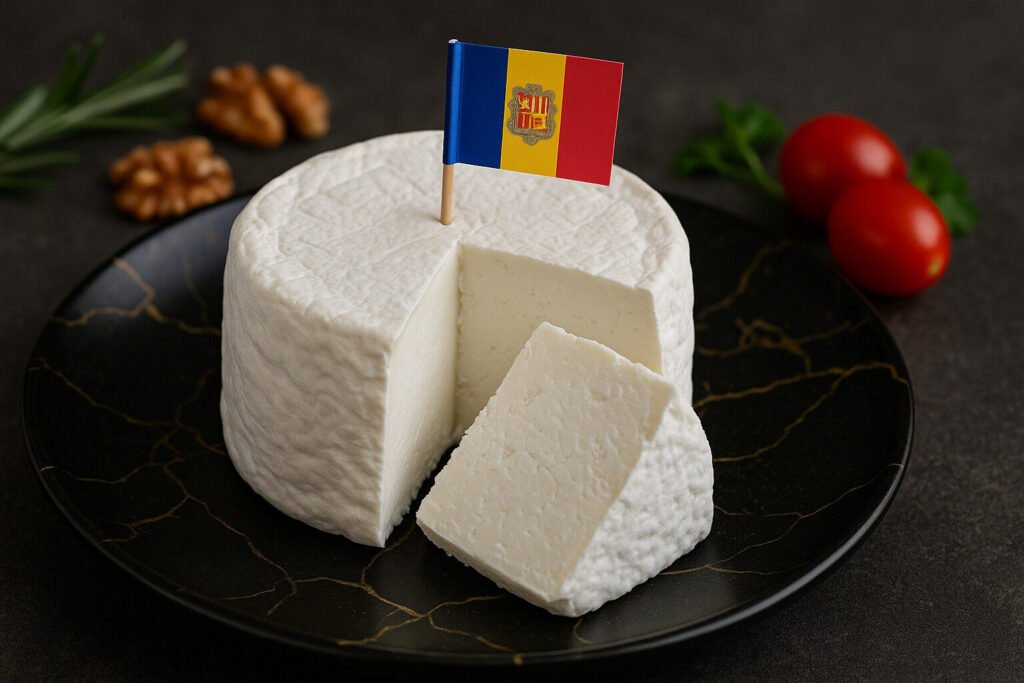
Formatge de cabra is easily recognized by its small, cylindrical shape and natural rind. A typical wheel weighs between 500 grams and 1 kilogram. The rind is thin, edible, and often bears the imprint of the traditional basket used during draining.
The interior paste is white to ivory in color, with a smooth yet slightly crumbly texture. Its aroma is clean and goaty, without being overpowering. The flavor profile is balanced, offering a pleasant acidity alongside herbal and floral notes from the mountain pastures.
Production Process: Formatge de cabra
The production of Formatge de cabra begins with fresh, raw goat’s milk. The milk is gently warmed to around 30 degrees Celsius before rennet is added for coagulation. This process takes approximately one hour to form a firm curd.
The curd is then cut into small pieces and ladled into perforated molds for draining. The cheeses are turned regularly to ensure even whey expulsion. After unmolding, they are dry-salted or brined and then left to age in cool, humid cellars.
Traditions: Formatge de cabra
Formatge de cabra is central to many Andorran family and community traditions. It is often made during the summer months when goats graze on lush alpine meadows. Many households still produce their own cheese for personal consumption.
The cheese is a staple on the table during festivals and family gatherings. It is commonly served as part of a traditional “platter of the land” alongside cured meats and bread. This practice celebrates local produce and culinary heritage.
Local Wine or Beverage Pairings
Formatge de cabra pairs wonderfully with light, crisp white wines from nearby Catalan regions. A young Godello or a Verdejo complements the fresh cheese’s acidity beautifully. Their citrus notes enhance the cheese’s creamy texture.
For aged Formatge de cabra, a slightly oaked Chardonnay or a light red wine like Pinot Noir works well. The wine’s structure can match the cheese’s more robust character. Local herbal liqueurs or light beers also make excellent accompaniments.
Suitable Fruit and Vegetables
Fresh Formatge de cabra is delightful with sweet and crisp fruits. Slices of apple, pear, or fresh figs provide a nice contrast to its tanginess. Grapes and melon also pair well, offering a juicy counterpoint.
Vegetables like roasted peppers, artichokes, and sun-dried tomatoes complement the cheese’s earthy notes. A simple salad of mixed greens with a light vinaigrette is another excellent choice. The cheese can also be crumbled over grilled vegetables for added flavor.
Suitable Meat and Fish
Formatge de cabra works well with various cured meats, especially those from the Pyrenees. Thinly sliced fuet or salchichón provides a savory, fatty contrast to the cheese. It also pairs nicely with serrano ham or other dry-cured specialties.
For fish, try it with grilled trout or salmon. The cheese’s creaminess can enhance oily fish without overpowering it. It can be used in stuffings or as a topping for baked fish dishes.
Recipe Ideas
Transform a simple salad into a spectacular meal by crumbling 100 grams of Formatge de cabra over fresh mixed greens, toasted walnuts, and sliced pears. The cheese’s creamy texture and mild tang beautifully complement the sweet fruit and crunchy nuts. For a warm appetizer, quickly bake whole rounds of the cheese drizzled with 15 ml of local honey until just soft and serve with crusty bread.
Create a rich and satisfying pasta sauce by whisking 150 grams of softened goat cheese into 240 ml of the hot pasta cooking water along with fresh herbs and black pepper. This simple technique creates an instantly creamy, luxurious coating for your favourite pasta shapes. You can also stuff chicken breasts or pork tenderloin with a mixture of the cheese, spinach, and herbs for a moist and flavourful main course.
Andorran Goat Cheese Salad
This salad showcases the fresh, tangy flavor of Formatge de cabra in a simple, refreshing dish. It is a popular starter in Andorran homes, especially during the warmer months. The combination of textures and flavors highlights the quality of local produce.
The recipe requires minimal preparation, letting the cheese be the star. It is perfect for a light lunch or as part of a larger meal. You can easily adjust the ingredients based on seasonal availability.
- 150 grams fresh Formatge de cabra, crumbled
- Mixed salad greens (200 grams)
- 1 ripe pear, thinly sliced
- 50 grams walnuts, lightly toasted
- 2 tablespoons extra virgin olive oil
- 1 tablespoon sherry vinegar
- Salt and black pepper to taste
- Wash and dry the salad greens thoroughly.
- Arrange the greens on a large serving plate.
- Scatter the crumbled cheese, pear slices, and walnuts over the greens.
- In a small bowl, whisk together the olive oil and sherry vinegar.
- Drizzle the dressing over the salad and season with salt and pepper.
- Toss gently just before serving.
Baked Formatge de Cabra with Honey and Thyme
This warm, comforting dish is ideal for sharing. It transforms aged Formatge de cabra into a molten, decadent appetizer. The sweetness of honey and the aroma of thyme complement the cheese’s savory depth.
This recipe is often enjoyed during autumn and winter gatherings. It pairs wonderfully with crusty bread for dipping. The contrast between the hot cheese and cool accompaniments is delightful.
- 1 whole wheel of aged Formatge de cabra (about 400 grams)
- 2 tablespoons runny honey
- 3 sprigs of fresh thyme
- 1 tablespoon olive oil
- Crusty bread, for serving
- Preheat your oven to 180 degrees Celsius.
- Place the whole cheese wheel in a small, oven-safe dish.
- Score the top of the cheese in a crosshatch pattern.
- Drizzle the honey and olive oil over the cheese.
- Place the thyme sprigs on top.
- Bake for 12-15 minutes, until the cheese is soft and bubbling.
- Serve immediately with slices of crusty bread.
Similar Cheeses and Local Alternatives
Formatge de cabra shares similarities with other Pyrenean goat cheeses, such as France’s Pouligny-Saint-Pierre and Spain’s Garrotxa. Pouligny-Saint-Pierre offers a more pronounced pyramid shape and a slightly ash-coated rind, while Garrotxa from Catalonia is known for its longer aging and bluish-grey mold rind. Both provide a comparable tangy and earthy profile that cheese lovers will appreciate.
Within Andorra, some producers also make mixed milk cheeses that include cow or sheep milk alongside goat. These blends offer a creamier, milder alternative while still retaining a local character. For those seeking a stronger flavor, exploring aged versions of Formatge de cabra or other Catalan cheeses like Mató can provide a delightful tasting journey through the region’s dairy traditions.
Formatge de cabra: Questions and answers
What foods pair well with Formatge de cabra?
Formatge de cabra pairs beautifully with crisp fruits like apples, pears, and fresh figs. It complements light white wines such as Godello or Verdejo, which enhance its acidity. Serve it with cured meats, crusty bread, or a simple green salad for a balanced platter.
What are good substitutes for Formatge de cabra?
Garrotxa or Pouligny-Saint-Pierre are excellent substitutes for Formatge de cabra due to similar tangy and earthy profiles. For a milder option, try a fresh chèvre or a blended milk cheese from the Pyrenees region. These alternatives maintain the desired creamy texture and herbal notes.
Is Formatge de cabra safe to eat during pregnancy?
Pasteurized Formatge de cabra is safe to eat during pregnancy, but avoid raw milk versions due to listeria risk. Always check the label or ask the vendor about the milk treatment used. Consume the cheese within its freshness period and store it correctly to ensure safety.
What is the shelf life of Formatge de cabra?
Fresh Formatge de cabra should be consumed within a few days of purchase for optimal quality. Aged Formatge de cabra can last several weeks when stored properly in the refrigerator. Always check for any off smells or mold beyond the natural rind before eating.
Where can I buy authentic Formatge de cabra?
Look for Formatge de cabra at specialty cheese shops, local markets in Andorra, or online retailers specializing in European cheeses. Check for labels indicating its origin and whether it is made from raw milk. Authentic versions often come from small-scale Andorran producers.
How do I properly cut Formatge de cabra?
Use a sharp, thin-bladed knife to slice Formatge de cabra into even wedges or rounds. For cylindrical formats, cut across the wheel to create uniform portions. This method preserves the cheese’s texture and ensures each piece includes both paste and rind.
At what temperature should I serve Formatge de cabra?
Remove Formatge de cabra from the refrigerator about 30 minutes before serving to reach room temperature. This allows its flavors and aromas to fully develop for the best tasting experience. Serving it too cold can mask its delicate herbal and tangy notes.
What is the best way to store Formatge de cabra?
Wrap Formatge de cabra in wax paper or parchment and place it in the vegetable drawer of your refrigerator. Keep it away from strong-smelling foods to prevent flavor absorption. Ensure the cheese is in a sealed container to maintain humidity and prevent drying out.
How should I use Formatge de cabra in cooking?
Formatge de cabra can be crumbled over salads or melted into warm pasta sauces for a creamy texture. It works well stuffed into meats like chicken or pork with herbs for added flavor. You can also bake it with honey as a simple, elegant appetizer served with bread.