
In this article
Local Guyanese White Cheese Distinctive Features
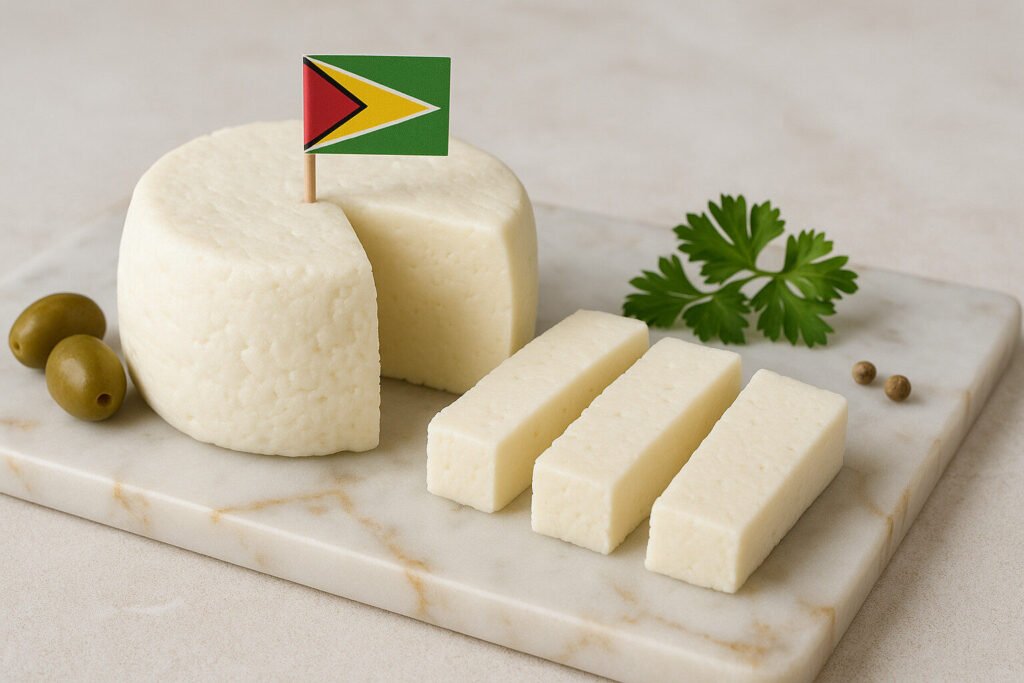
Local Guyanese White Cheese typically forms in small blocks or wheels weighing about 250 to 500 grams. Its surface is smooth and rindless, presenting a pure white hue throughout. The cheese has a high moisture content, often around 50%, which gives it a soft and easily crumbled consistency.
This cheese features a firm yet yielding texture that breaks apart cleanly. It contains approximately 40-45% fat in dry matter, contributing to a rich, creamy mouthfeel. Local Guyanese White Cheese does not melt readily, making it perfect for fresh applications like salads or garnishes.
Local Guyanese White Cheese Varieties
Some producers in Guyana add herbs or spices to create flavored versions of Local Guyanese White Cheese. Common additions include fine black pepper, fresh chives, or even hot peppers for a spicy kick. These varieties maintain the base cheese’s texture but offer enhanced flavor profiles for diverse dishes.
Another variation involves using different milk types, such as goat’s milk, though cow’s milk remains standard. In coastal regions, you might find Local Guyanese White Cheese with a slightly saltier taste due to local brining practices. These adaptations reflect Guyana’s multicultural influences and regional preferences.
Local Guyanese White Cheese History and Traditions
Local Guyanese White Cheese has roots in Guyana’s dairy farming history, dating back to the 19th century. British colonial influences introduced cheese-making techniques, which locals adapted using available resources. The cheese became a staple due to its simplicity and ability to complement Guyana’s tropical climate.
Guyana is also famous for its sugarcane production, rum distilleries, and diverse fruits like mangoes and pineapples. Local Guyanese White Cheese often features in holiday meals and community gatherings, symbolizing hospitality. Families traditionally serve it with freshly baked bread or incorporate it into festive dishes like pepperpot stew.
Production Process and Producers
Local Guyanese White Cheese starts with fresh cow’s milk sourced from local dairy farms in regions like Essequibo or Berbice. The milk is pasteurized and then curdled using animal rennet or vegetarian alternatives. Workers drain the curds and press them lightly into molds to form the characteristic blocks.
The cheese undergoes a brief aging period of just one to two days, retaining its high moisture. Main producers include the Guyana Dairy Development Project, small-scale artisans like Mahaica Creamery, and cooperatives across the country. These producers ensure consistent quality while supporting local agriculture.
Quality Labels and Certifications
As to our current knowledge, Local Guyanese White Cheese does not hold protected designation of origin status. However, it may comply with Guyana’s national food safety standards administered by the Government Analyst Food and Drug Department. These regulations ensure hygiene and quality in production.
Some artisanal makers pursue organic certifications, though this is not widespread. Consumers can look for labels indicating compliance with local health codes. These assurances help maintain trust in Local Guyanese White Cheese as a safe, wholesome product.
Wine or Beverage Pairings
Local Guyanese White Cheese pairs wonderfully with light, crisp white wines such as Sauvignon Blanc or Pinot Grigio. These wines complement the cheese’s mild acidity and creamy texture without overpowering it. For a regional touch, try it with Guyanese Banks Beer or a citrusy sorrel drink.
Rum-based cocktails, like those made with El Dorado rum, also enhance the cheese’s subtle flavors. Non-alcoholic options include fresh coconut water or tamarind juice. These beverages balance the cheese’s richness and refresh the palate.
Suitable Fruit and Vegetables
Local Guyanese White Cheese excels with sweet, tropical fruits like ripe mangoes, pineapples, and papayas. The fruit’s natural sugars contrast beautifully with the cheese’s mild saltiness. Fresh tomatoes and cucumbers also make excellent companions, adding crunch and acidity.
In salads, pair it with avocado slices or grilled plantains for a creamy texture. Bell peppers and scallions provide a peppery bite that highlights the cheese’s freshness. These combinations are popular in Guyanese cuisine for their vibrant colors and flavors.
Suitable Meat and Fish dishes
Local Guyanese White Cheese crumbles perfectly over grilled fish dishes, such as snapper or tilapia. It adds a creamy element to the flaky texture of the fish. In meat-based meals, it works well in chicken curries or stews, where it thickens sauces subtly.
Try incorporating it into ground beef patties or lamb kebabs for added moisture. The cheese does not melt entirely, so it retains its shape and texture. These uses make Local Guyanese White Cheese a versatile ingredient in hearty, savory dishes.
Local Guyanese White Cheese Presentation
Serve Local Guyanese White Cheese at room temperature, about 20-22°C, for optimal flavor. Remove it from the refrigerator 30 minutes before serving to allow it to warm slightly. Arrange it on a wooden or ceramic platter to showcase its bright white color.
Cut the cheese into cubes or slices using a sharp knife for easy eating. Provide small forks or cheese picks for guests to handle individual portions. Pair it with crackers or bread to create an appealing, balanced cheese board.
Questions and Answers
What is Local Guyanese White Cheese?
Local Guyanese White Cheese is a fresh, soft cheese made from cow’s milk in Guyana. It has a mild flavor and crumbly texture, ideal for many dishes. Local Guyanese White Cheese is a staple in Guyanese households.
How should I store Local Guyanese White Cheese?
Store Local Guyanese White Cheese in the refrigerator at 4°C, wrapped in wax paper or plastic wrap. Keep it in the dairy compartment to maintain freshness. Local Guyanese White Cheese typically lasts up to one week when stored properly.
Can I freeze Local Guyanese White Cheese?
Freezing Local Guyanese White Cheese is not recommended as it can alter the texture. The high moisture content may cause it to become watery upon thawing. For best quality, consume Local Guyanese White Cheese fresh.
How do I cut Local Guyanese White Cheese?
Use a sharp knife to cut Local Guyanese White Cheese into even cubes or slices. Apply gentle pressure to avoid crumbling it excessively. Local Guyanese White Cheese cuts cleanly when chilled slightly.
Where can I buy Local Guyanese White Cheese?
You can purchase Local Guyanese White Cheese at local markets in Guyana or specialty Caribbean stores abroad. Look for it in the dairy article. Local Guyanese White Cheese is also available from online retailers serving the diaspora.
What is the shelf life of Local Guyanese White Cheese?
Local Guyanese White Cheese has a short shelf life of about 5-7 days when refrigerated. Check for any off smells or mold before use. Always consume Local Guyanese White Cheese before the expiration date on the package.
Can I use Local Guyanese White Cheese in cooking?
Yes, Local Guyanese White Cheese is excellent for cooking in dishes like salads, sandwiches, and baked goods. It does not melt completely, so it adds texture. Local Guyanese White Cheese enhances flavors without dominating them.
Is Local Guyanese White Cheese lactose-free?
Local Guyanese White Cheese contains lactose, as it is made from cow’s milk. Those with lactose intolerance should consume it in moderation. Local Guyanese White Cheese may have lower lactose than aged cheeses due to its freshness.
How does Local Guyanese White Cheese compare to feta?
Local Guyanese White Cheese is milder and less salty than feta cheese. It has a softer texture and higher moisture content. Local Guyanese White Cheese is often used similarly but with a gentler flavor profile.
What are the nutritional benefits of Local Guyanese White Cheese?
Local Guyanese White Cheese provides protein, calcium, and vitamins from milk. It has moderate fat content, around 40-45% in dry matter. Local Guyanese White Cheese supports bone health and muscle maintenance when eaten as part of a balanced diet.
Recipe Ideas
Local Guyanese White Cheese and Mango Salad
This refreshing salad highlights the tropical flavors of Guyana. Local Guyanese White Cheese adds a creamy contrast to the sweet mangoes. It is perfect for hot days or as a light side dish.
The combination of textures and colors makes it visually appealing. Use ripe but firm mangoes for the best results. This dish showcases Local Guyanese White Cheese in a simple, no-cook preparation.
- 200 grams Local Guyanese White Cheese, cubed
- 1 large ripe mango, peeled and diced
- 1 small red onion, thinly sliced
- 1 fresh lime, juiced
- 2 tablespoons chopped cilantro
- Salt and pepper to taste
- In a large bowl, combine the cubed Local Guyanese White Cheese and diced mango.
- Add the sliced red onion and chopped cilantro to the bowl.
- Squeeze fresh lime juice over the mixture and season with salt and pepper.
- Toss gently to combine all ingredients without breaking the cheese.
- Chill for 10 minutes before serving to allow flavors to meld.
Grilled Fish with Local Guyanese White Cheese Sauce
This recipe brings out the best in Local Guyanese White Cheese with a savory sauce. The cheese thickens the sauce without melting completely. It pairs wonderfully with grilled fish like snapper or tilapia.
The dish is a staple in coastal Guyanese cuisine. Local Guyanese White Cheese adds richness to the light fish. Serve it with steamed rice or vegetables for a complete meal.
- 4 fish fillets (about 150 grams each)
- 150 grams Local Guyanese White Cheese, crumbled
- 1 cup coconut milk
- 2 cloves garlic, minced
- 1 tablespoon vegetable oil
- Fresh thyme and scallions for garnish
- Heat oil in a pan and sauté garlic until fragrant.
- Add coconut milk and bring to a gentle simmer.
- Stir in crumbled Local Guyanese White Cheese until the sauce thickens slightly.
- Grill the fish fillets for 3-4 minutes per side until cooked through.
- Pour the cheese sauce over the grilled fish and garnish with thyme and scallions.
Similar Cheeses and Alternatives
If you enjoy Local Guyanese White Cheese, you might like queso fresco from Latin America, which shares a similar fresh, crumbly texture. Paneer from India is another alternative, though it is often firmer and used in cooked dishes. These cheeses all serve as versatile, mild options in various cuisines, reflecting their cultural origins while providing a blank canvas for flavors.