
In this article
Distinctive Features of Icelandic Blue Cheese (Bláskyr)
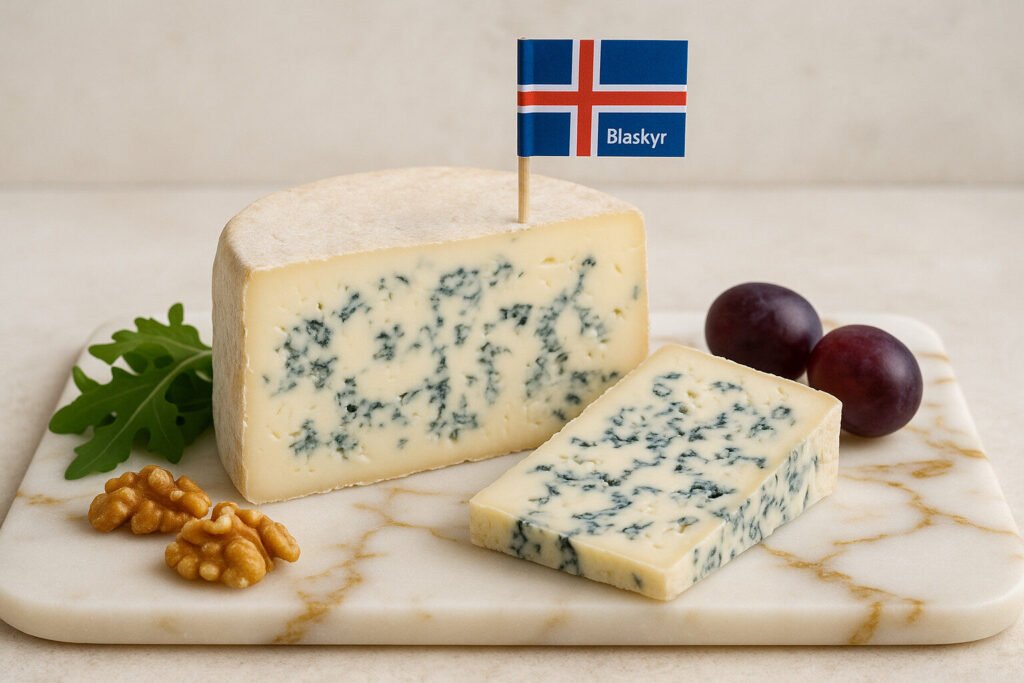
Icelandic Blue Cheese (Bláskyr) typically comes in small wheels weighing 200 to 500 grams. The paste is a creamy white color with prominent blue-green veins running throughout. Its texture is smooth and spreadable when young, becoming more crumbly as it ages. The cheese has a high moisture content, around 60%, which gives it a soft, yielding consistency. Fat in dry matter averages 50%, contributing to a rich, buttery mouthfeel. The rind is natural and often edible, adding a slight earthy note.
As Bláskyr matures, its flavor intensifies from mild and tangy to robust and pungent. The blue mold, Penicillium roqueforti, creates a characteristic sharpness balanced by creamy undertones. This cheese maintains a firm yet pliable structure that holds up well to slicing. Its distinctive aroma is earthy with hints of fermentation, typical of quality blue cheeses. The overall impression is one of complexity and depth, appealing to adventurous palates.
Cheese Varieties of Icelandic Blue Cheese (Bláskyr)
Several varieties of Icelandic Blue Cheese (Bláskyr) exist, primarily based on aging duration. A young Bláskyr, aged for two to four weeks, offers a mild flavor and creamy texture. An aged version, matured for over three months, develops a stronger, more complex taste and a crumbly structure. Some producers create flavored Bláskyr by incorporating local ingredients like wild thyme or birch smoke. These adaptations highlight Iceland’s natural resources and cater to diverse culinary preferences.
Another variety includes a low-fat Bláskyr, which reduces fat content while retaining the blue veins. Artisanal producers might experiment with different milk sources, though cow’s milk remains standard. Seasonal variations can occur, influenced by changes in pasture and dairy practices. These varieties ensure that Icelandic Blue Cheese (Bláskyr) remains versatile and accessible to different tastes and dietary needs.
History and Traditions of Icelandic Blue Cheese (Bláskyr)
Icelandic Blue Cheese (Bláskyr) has its roots in the ancient tradition of skyr making, which dates back over a thousand years to the Viking Age. Skyr was originally developed as a method to preserve milk in Iceland’s harsh, cold climate. The introduction of blue mold cultures in the mid-20th century transformed traditional skyr into Bláskyr, adding a new dimension to Icelandic dairy. This innovation allowed for a cheese that combines local heritage with global blue cheese techniques.
Iceland is renowned for its pristine environment and unique foods like lamb, fish, and skyr. Bláskyr is often enjoyed during festive occasions such as Þorrablót, a midwinter feast celebrating Icelandic heritage. It pairs traditionally with dense rye bread and smoked fish, reflecting the island’s culinary identity. The cheese symbolizes resilience and adaptation, key traits in Icelandic culture. Stories of early producers experimenting with mold cultures add to its rich narrative.
Production Process and Producers
Icelandic Blue Cheese (Bláskyr) begins with high-quality pasteurized cow’s milk from Icelandic dairy farms. The milk is warmed and inoculated with lactic acid bacteria and Penicillium roqueforti spores. Rennet is added to coagulate the milk, forming curds that are cut and drained to remove whey. This process ensures a clean, tangy base for the blue mold to develop. The curds are then placed into molds and pressed to achieve the desired shape and density.
After unmolding, the cheese is pierced with needles to allow air circulation, promoting the growth of blue veins. It ages in humidity-controlled cellars for several weeks to months, depending on the variety. Key producers in Iceland include MS Iceland Dairies, Kári Dairy, and various small-scale artisans. These producers uphold traditional methods while ensuring consistency and quality. The result is a cheese that embodies Iceland’s dairy expertise and natural purity.
Quality Labels and Certifications
As to our current knowledge, Icelandic Blue Cheese (Bláskyr) may carry the “Made in Iceland” label, which ensures its origin and adherence to local production standards. This label guarantees that the cheese is made from Icelandic milk using traditional methods. It helps consumers identify authentic products from the region. Such certifications support local farmers and promote sustainable dairy practices in Iceland.
Some producers also obtain organic certifications, following strict guidelines on animal welfare and environmental sustainability. These labels assure customers of the cheese’s quality and ethical production. While not all Bláskyr has protected status, these marks highlight its artisanal roots. They reinforce the cheese’s reputation for purity and craftsmanship in the global market.
Wine or Beverage Pairings
Icelandic Blue Cheese (Bláskyr) pairs excellently with sweet and fortified wines. A late-harvest Riesling or Sauternes complements its tangy and salty notes beautifully. The wine’s acidity cuts through the richness of the cheese, enhancing its creamy texture. For a local touch, Brennivín, an Icelandic schnapps, accentuates the bold flavors with its caraway notes.
Robust red wines like Syrah or Malbec also work well, as their tannins balance the cheese’s intensity. Icelandic craft beers, particularly stouts or porters, offer a harmonious match with their roasted malt profiles. Non-alcoholic options include apple cider or herbal teas, which provide a refreshing contrast. These pairings highlight the versatility of Icelandic Blue Cheese (Bláskyr) across different beverages.
Suitable Fruit and Vegetables
Icelandic Blue Cheese (Bláskyr) pairs wonderfully with sweet fruits like ripe pears and fresh figs. The fruit’s natural sugars contrast with the cheese’s saltiness, creating a balanced flavor profile. Apples and grapes also provide a refreshing crunch that complements the creamy texture. These fruits enhance the cheese’s complexity without overpowering it.
Among vegetables, crisp celery and bitter endive are excellent choices. They add texture and balance to the cheese’s intensity. Roasted root vegetables like carrots or beets can be served alongside for a savory twist. Leafy greens such as arugula offer a peppery note that pairs well. These combinations make for vibrant, nutritious accompaniments.
Suitable Meat and Fish dishes
Icelandic Blue Cheese (Bláskyr) enhances meat dishes such as smoked lamb or grilled beef. Its creamy texture melts beautifully over hot meats, adding depth and richness. The cheese’s bold flavor stands up to gamey tastes, making it ideal for hearty meals. Crumbled Bláskyr can be used in stuffings or sauces to elevate simple dishes.
For fish, it pairs superbly with smoked salmon or pan-seared arctic char. The saltiness of the cheese complements the fish’s delicate flavor. Incorporating Bláskyr into seafood pastas or tarts adds a tangy contrast. These pairings showcase the cheese’s adaptability in both traditional and modern recipes.
Presentation of Icelandic Blue Cheese (Bláskyr)
To present Icelandic Blue Cheese (Bláskyr), remove it from the refrigerator at least 30 minutes before serving. This allows it to reach room temperature, around 18 to 20 degrees Celsius, which enhances its aroma and texture. Serve it on a wooden board or slate plate to highlight its rustic appeal. Arrange accompaniments like fruits, nuts, and bread around the cheese for visual interest.
Use a dedicated cheese knife for cutting and serving to maintain neat portions. For eating, provide small forks or spreaders to appreciate its creamy consistency. Ensure the cheese is placed centrally on the plate for easy access. This presentation style emphasizes the cheese’s artisanal qualities and invites guests to explore its flavors.
Questions and Answers about Icelandic Blue Cheese (Bláskyr)
What is Icelandic Blue Cheese (Bláskyr)?
Icelandic Blue Cheese (Bláskyr) is a blue-veined cheese made from cow’s milk in Iceland, known for its creamy texture and tangy flavor. It combines traditional skyr methods with mold cultures for a unique taste. Icelandic Blue Cheese (Bláskyr) is versatile in both sweet and savory dishes.
How should I store Icelandic Blue Cheese (Bláskyr)?
Store Icelandic Blue Cheese (Bláskyr) in the refrigerator at 4°C, wrapped in parchment paper or foil to allow breathing. Keep it in the vegetable drawer to maintain humidity. Icelandic Blue Cheese (Bláskyr) should be consumed within two weeks of opening for best quality.
What is the shelf life of Icelandic Blue Cheese (Bláskyr)?
Unopened Icelandic Blue Cheese (Bláskyr) lasts up to three weeks in the fridge. Once opened, use Icelandic Blue Cheese (Bláskyr) within 10 to 14 days. Proper storage extends the shelf life of Icelandic Blue Cheese (Bláskyr).
How do I cut Icelandic Blue Cheese (Bláskyr)?
Cut Icelandic Blue Cheese (Bláskyr) with a sharp cheese knife to preserve its crumbly texture. Slice it into wedges or cubes for serving. Icelandic Blue Cheese (Bláskyr) is best cut at room temperature to avoid breaking.
Where can I buy Icelandic Blue Cheese (Bláskyr)?
Buy Icelandic Blue Cheese (Bláskyr) in specialty cheese shops, Icelandic supermarkets, or online retailers. Look for it in the dairy article with other imported cheeses. Icelandic Blue Cheese (Bláskyr) is increasingly available in international markets.
Can Icelandic Blue Cheese (Bláskyr) be used in cooking?
Yes, Icelandic Blue Cheese (Bláskyr) can be used in cooking for sauces, dips, and baked dishes. It melts well, adding creaminess to recipes. Icelandic Blue Cheese (Bláskyr) enhances flavors in both hot and cold preparations.
What are the nutritional benefits of Icelandic Blue Cheese (Bláskyr)?
Icelandic Blue Cheese (Bláskyr) is rich in protein, calcium, and vitamins like B12. It contains probiotics from the fermentation process. Icelandic Blue Cheese (Bláskyr) provides energy and supports bone health in moderation.
Is Icelandic Blue Cheese (Bláskyr) suitable for vegetarians?
Icelandic Blue Cheese (Bláskyr) may not be vegetarian if animal rennet is used; check labels for microbial alternatives. Some versions of Icelandic Blue Cheese (Bláskyr) are vegetarian-friendly. Always verify with the producer for specific details.
How does Icelandic Blue Cheese (Bláskyr) compare to other blue cheeses?
Icelandic Blue Cheese (Bláskyr) is creamier and less salty than many European blue cheeses. It has a milder tang due to its skyr base. Icelandic Blue Cheese (Bláskyr) offers a unique balance of flavors distinct from counterparts like Roquefort.
What is the best way to serve Icelandic Blue Cheese (Bláskyr)?
Serve Icelandic Blue Cheese (Bláskyr) at room temperature on a cheese board with fruits and nuts. Pair it with crackers or bread for a complete experience. Icelandic Blue Cheese (Bláskyr) shines when allowed to breathe before serving.
Recipe Ideas
Bláskyr and Pear Crostini
This recipe highlights the creamy tang of Icelandic Blue Cheese (Bláskyr) with the sweetness of ripe pears. It makes an elegant appetizer for gatherings or a light snack. The combination of textures and flavors is sure to impress guests. Icelandic Blue Cheese (Bláskyr) melts slightly on warm bread, enhancing its richness.
Using fresh, seasonal pears ensures a natural sweetness that balances the cheese’s saltiness. The crostini can be prepared in advance and assembled just before serving. This dish showcases the versatility of Icelandic Blue Cheese (Bláskyr) in simple, yet sophisticated preparations. It pairs well with a crisp white wine or sparkling water.
- 1 baguette, sliced into 1 cm thick pieces
- 150 g Icelandic Blue Cheese (Bláskyr), crumbled
- 2 ripe pears, thinly sliced
- 2 tbsp honey
- Fresh thyme leaves for garnish
- Olive oil for brushing
- Preheat oven to 180°C. Brush baguette slices with olive oil and toast for 5-7 minutes until golden.
- Arrange pear slices on each crostini. Top with crumbled Icelandic Blue Cheese (Bláskyr).
- Drizzle with honey and sprinkle thyme leaves. Serve immediately.
Bláskyr Stuffed Chicken Breast
This main course recipe uses Icelandic Blue Cheese (Bláskyr) to add moisture and flavor to chicken breasts. The cheese creates a creamy filling that keeps the meat tender during cooking. It is a hearty dish perfect for family dinners or special occasions. Icelandic Blue Cheese (Bláskyr) infuses the chicken with a subtle tanginess.
Pairing the stuffed chicken with roasted vegetables makes for a balanced meal. The blue veins in Icelandic Blue Cheese (Bláskyr) add visual appeal to the dish. This recipe demonstrates how Icelandic Blue Cheese (Bláskyr) can elevate everyday ingredients. It is easy to customize with herbs or spices based on preference.
- 4 chicken breasts, butterflied
- 200 g Icelandic Blue Cheese (Bláskyr), softened
- 2 cloves garlic, minced
- 1 tbsp fresh parsley, chopped
- Salt and pepper to taste
- 1 tbsp olive oil
- Preheat oven to 190°C. Mix Icelandic Blue Cheese (Bláskyr), garlic, parsley, salt, and pepper in a bowl.
- Stuff each chicken breast with the cheese mixture and secure with toothpicks.
- Heat olive oil in an oven-safe skillet. Sear chicken for 3 minutes per side.
- Transfer skillet to oven and bake for 15-20 minutes until chicken reaches 75°C internally. Rest before serving.
Similar Cheeses and Alternatives
Icelandic Blue Cheese (Bláskyr) shares similarities with other blue-veined cheeses like Danish Blue and Gorgonzola Dolce. Danish Blue offers a saltier, more intense flavor but lacks the creamy texture of Bláskyr. Gorgonzola Dolce is milder and creamier, making it a close alternative for those who enjoy soft blue cheeses. Other skyr-based cheeses from Iceland provide a similar base but without the mold, appealing to those who prefer a milder taste.
For a local alternative, traditional Icelandic skyr can be used in recipes where a tangy, creamy element is needed. International options include Roquefort or Stilton, which are more pungent and crumbly. These cheeses can substitute for Icelandic Blue Cheese (Bláskyr) in many dishes, though the unique skyr influence may be missed. Exploring these alternatives allows chefs to adapt recipes based on availability and preference.