
In this article
Distinctive Features of Queso Bagaces
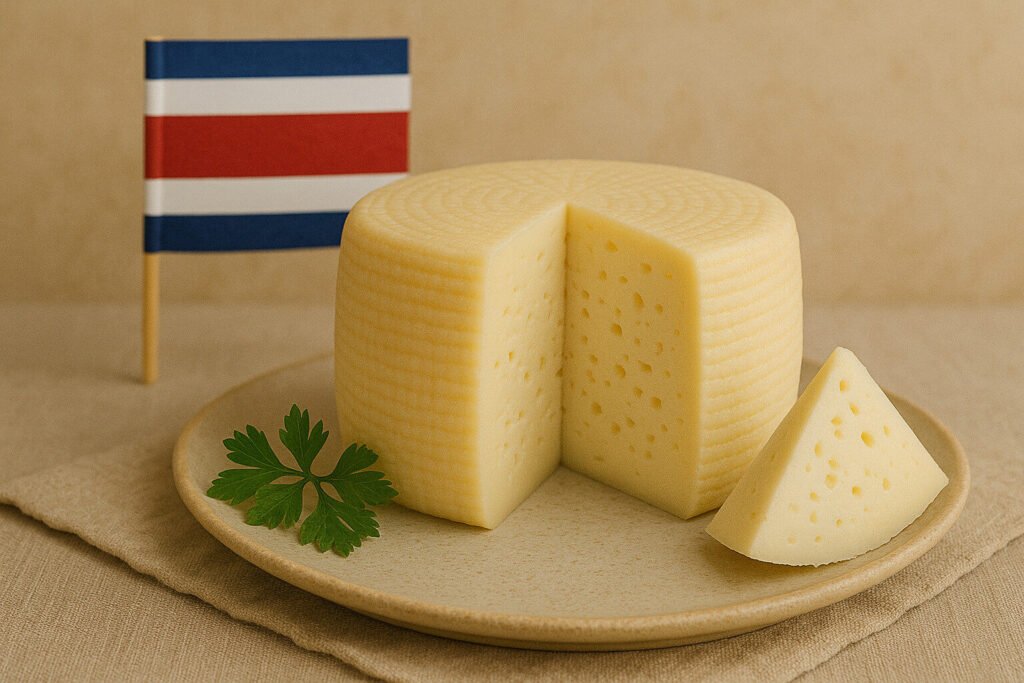
Queso Bagaces typically comes in small, cylindrical wheels weighing around 500 grams to 1 kilogram. Its exterior is pure white with a thin, natural rind that forms during brief aging. The interior paste is bright white, moist, and has a firm yet crumbly consistency that breaks apart easily.
The texture of Queso Bagaces is semi-soft with a high humidity level, around 50-55%, which contributes to its fresh character. It has a fat content in dry matter of approximately 45%, giving it a rich mouthfeel without being overly heavy. Its flavor profile is mild and milky, with a subtle saltiness that enhances without dominating.
Queso Bagaces Varieties
While Queso Bagaces is primarily known as a fresh cheese, some local producers create a slightly aged version. This aged Queso Bagaces is left to mature for a few weeks, developing a firmer texture and a more pronounced salty flavor. It remains distinct from hard cheeses due to its retained moisture.
Another variety includes Queso Bagaces with added herbs or spices, such as cilantro or black pepper, which are mixed into the curds. These flavored versions are less common but showcase the adaptability of this cheese. They are often sold in local markets and cater to modern tastes.
History and Traditions of Queso Bagaces
Queso Bagaces has deep roots in the rural traditions of the Bagaces district in Guanacaste, Costa Rica. It originated from Spanish colonial dairy practices adapted to the local tropical climate. Farmers developed this cheese as a way to preserve milk in a region known for its cattle ranching.
The region is also famous for its sabanero culture, featuring dishes like gallo pinto and casados, where Queso Bagaces is a key component. Traditional festivals often include cheese-making demonstrations, celebrating this culinary heritage. Stories passed down through generations highlight its role in community gatherings.
Production Process and Producers of Queso Bagaces
Queso Bagaces is made from fresh, pasteurized cow’s milk sourced from local dairy farms in Guanacaste. The milk is heated to about 32°C, then rennet and starter cultures are added to form curds. The curds are cut, drained, and lightly pressed into molds before a short aging period of 1 to 3 days.
Key producers include small-scale artisanal dairies like Quesera La Fortuna, Quesos Don Carlos, and Cooperativa de Productores de Leche de Bagaces. These producers maintain traditional methods, ensuring the cheese’s authentic character. The cheese is often sold fresh in local markets and supermarkets across Costa Rica.
Quality Labels and Certifications for Queso Bagaces
As to our current knowledge, Queso Bagaces does not hold a Protected Designation of Origin (PDO) or similar European Union certifications. However, some producers may adhere to Costa Rican national food safety standards, such as those regulated by the Ministry of Agriculture. These ensure hygiene and quality in production.
There are no specific geographical indications for Queso Bagaces, but artisanal labels sometimes highlight its regional origin. Producers may use organic or sustainable practices, though formal certifications are not widespread. Consumers often rely on local reputation for quality assurance.
Wine or Beverage Pairings with Queso Bagaces
Queso Bagaces pairs wonderfully with light, crisp white wines like Costa Rican Sauvignon Blanc or Spanish Albariño. These wines complement the cheese’s mild acidity and fresh notes. Local beverages such as horchata or light lagers also work well, balancing its saltiness.
For a non-alcoholic option, try pairing Queso Bagaces with fresh fruit juices like mango or pineapple. The sweetness contrasts nicely with the cheese’s savory profile. Regional coffee, a Costa Rican staple, can be enjoyed alongside for a unique flavor experience.
Suitable Fruit and Vegetables for Queso Bagaces
Fresh fruits like ripe mangoes, pineapples, and papayas enhance Queso Bagaces with their natural sweetness. These tropical fruits are abundant in Costa Rica and create a refreshing contrast. Serve them sliced alongside the cheese for a simple appetizer.
Vegetables such as tomatoes, cucumbers, and avocados pair well due to their crisp textures. They can be used in salads or as crudités. Grilled bell peppers or zucchini also complement the cheese’s mild flavor in cooked dishes.
Suitable Meat and Fish dishes with Queso Bagaces
Queso Bagaces is excellent in traditional Costa Rican dishes like arroz con pollo, where it is crumbled over the top. It melts gently, adding creaminess without overpowering the chicken. It also works well with grilled meats like churrasco.
For fish, try incorporating Queso Bagaces into ceviche or baked fish dishes. Its mildness allows the seafood flavors to shine. It can be used as a stuffing for fish fillets or as a topping for tacos.
Presentation of Queso Bagaces
Present Queso Bagaces on a wooden or ceramic plate to highlight its artisanal nature. Remove it from the refrigerator about 30 minutes before serving to reach an ideal temperature of 15-18°C. This allows its flavors to fully develop.
Arrange the cheese in wedges or crumbled pieces, accompanied by crackers or bread. Use a cheese knife for cutting and a small fork for serving. For eating, simple utensils like a knife and fork are sufficient, or it can be enjoyed with fingers in informal settings.
Questions and Answers about Queso Bagaces
Why is Queso Bagaces important in Costa Rican cuisine?
Queso Bagaces is important because it represents traditional dairy practices from the Guanacaste region. It is a versatile cheese used daily in many Costa Rican households. Queso Bagaces also supports local economies through artisanal production.
Can Queso Bagaces be exported internationally?
Queso Bagaces is primarily consumed within Costa Rica, but it can be found in specialty stores in Central America. Exporting Queso Bagaces requires proper refrigeration due to its fresh nature. Some producers are exploring international markets for Queso Bagaces.
Is Queso Bagaces used in Costa Rican restaurants?
Yes, Queso Bagaces is commonly used in Costa Rican restaurants, especially in traditional dishes. It appears in breakfast plates, snacks, and main courses. Queso Bagaces adds authenticity to the local gastronomic experience.
How should I store Queso Bagaces?
Store Queso Bagaces in the refrigerator at 4°C, wrapped in wax paper or plastic wrap. Keep Queso Bagaces away from strong odors to maintain its mild flavor. Proper storage helps Queso Bagaces last for up to two weeks.
What distinguishes Queso Bagaces from other fresh cheeses?
Queso Bagaces is distinguished by its specific origin in the Bagaces region and its traditional production methods. It has a unique crumbly texture and mild saltiness. Queso Bagaces is less acidic compared to some other fresh cheeses.
How is Queso Bagaces typically eaten?
Queso Bagaces is eaten fresh, crumbled over dishes, or melted in recipes. It is often enjoyed with tortillas or bread. Queso Bagaces can also be served alone as a snack.
How popular is Queso Bagaces in Costa Rica?
Queso Bagaces is very popular in Costa Rica, especially in the Guanacaste province. It is a common ingredient in daily meals. Queso Bagaces is celebrated for its cultural significance.
How is Queso Bagaces made?
Queso Bagaces is made from cow’s milk that is curdled using rennet. The curds are drained and pressed into molds. Queso Bagaces is then aged briefly before being sold fresh.
Where can I buy Queso Bagaces?
You can buy Queso Bagaces in local markets and supermarkets throughout Costa Rica. It is also available from artisanal producers in the Guanacaste region. Queso Bagaces is best purchased fresh for optimal flavor.
What is Queso Bagaces?
Queso Bagaces is a traditional fresh cheese from Costa Rica. It is known for its soft, crumbly texture and mild taste. Queso Bagaces is made from cow’s milk and is a staple in Costa Rican cuisine.
Recipe Ideas for Queso Bagaces
Queso Bagaces and Black Bean Empanadas
These empanadas are a popular snack in Costa Rica, featuring Queso Bagaces as a key ingredient. The cheese’s mild flavor blends perfectly with seasoned black beans. They are easy to make and perfect for gatherings.
Queso Bagaces adds a creamy texture that melts slightly when baked. This recipe highlights the cheese’s versatility in traditional dishes. Serve them warm for the best experience.
- 250 grams Queso Bagaces, crumbled
- 1 cup cooked black beans
- 1 small onion, finely chopped
- 2 cloves garlic, minced
- 1 packet empanada dough discs
- 1 teaspoon cumin
- Salt and pepper to taste
- Oil for frying
- In a bowl, mix crumbled Queso Bagaces, black beans, onion, garlic, cumin, salt, and pepper.
- Place a spoonful of the mixture onto each empanada dough disc.
- Fold the discs over and seal the edges with a fork.
- Heat oil in a pan and fry the empanadas until golden brown, about 3-4 minutes per side.
- Drain on paper towels and serve immediately.
Queso Bagaces and Tropical Fruit Salad
This refreshing salad combines Queso Bagaces with Costa Rica’s abundant tropical fruits. The cheese’s saltiness balances the sweetness of the fruits. It is an ideal light meal or side dish.
Queso Bagaces provides a protein-rich element that makes the salad satisfying. The recipe is quick to prepare and showcases local ingredients. It is perfect for warm weather.
- 200 grams Queso Bagaces, cubed
- 1 cup pineapple chunks
- 1 cup mango slices
- 1 avocado, diced
- 2 tablespoons lime juice
- 1 tablespoon honey
- Fresh mint leaves for garnish
- In a large bowl, combine cubed Queso Bagaces, pineapple, mango, and avocado.
- In a small bowl, whisk together lime juice and honey to make the dressing.
- Pour the dressing over the fruit and cheese mixture, and toss gently.
- Garnish with mint leaves and serve chilled.
Similar Cheeses and Alternatives to Queso Bagaces
Queso Fresco from Mexico is a close alternative to Queso Bagaces, sharing a similar fresh, crumbly texture and mild flavor. It is made from cow’s milk and can be used interchangeably in many recipes. However, Queso Fresco often has a slightly higher salt content.
Another similar cheese is Panela from Central America, which is also fresh but has a firmer texture. For those outside Costa Rica, Farmer’s Cheese or Indian Paneer can serve as substitutes, though they may lack the specific regional characteristics. These alternatives work well in cooking but might not replicate the exact taste of Queso Bagaces.