
In this article
Distinctive Features of Phô mai Mộc Châu
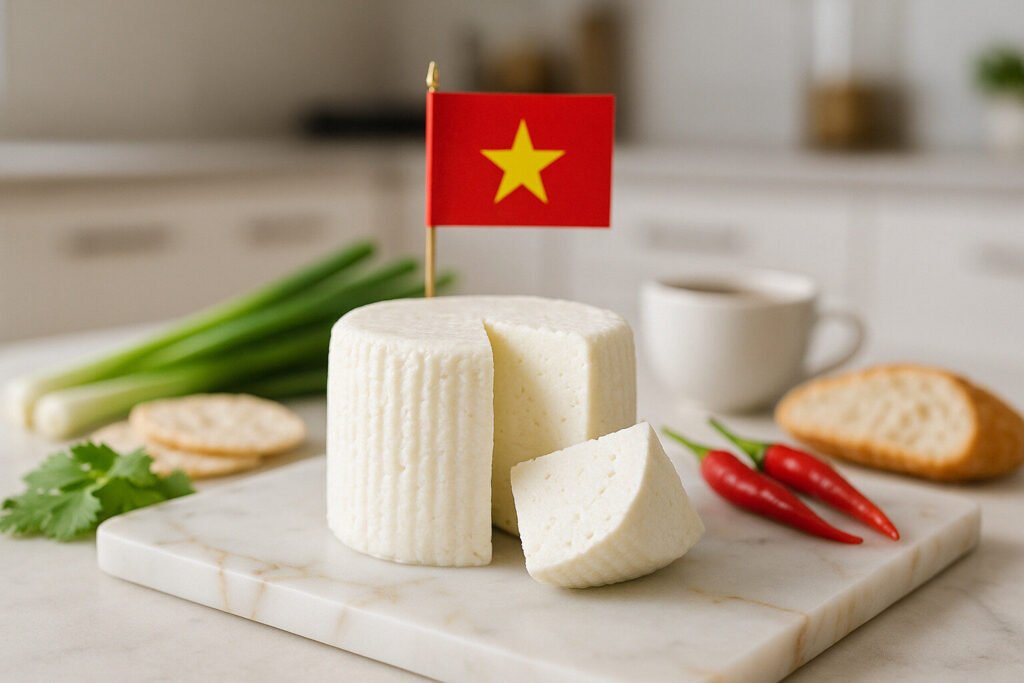
Phô mai Mộc Châu typically comes in small wheels weighing about 200 grams. Its rind is thin and edible, often displaying a pure white color. The interior paste is uniformly soft and moist.
The cheese has a high humidity level, giving it a spreadable consistency. Its texture is smooth and creamy without any granularity. Phô mai Mộc Châu melts easily and releases a fresh, dairy aroma.
Cheese Varieties of Phô mai Mộc Châu
Some producers offer Phô mai Mộc Châu with added herbs like perilla or lemongrass. These infused versions maintain the base creamy texture but introduce aromatic notes. They are popular in modern Vietnamese fusion dishes.
Another variety includes a slightly aged version held for one to two weeks. This aging develops a firmer texture and a tangier flavor profile. It is often grated over soups or salads.
History and Traditions of Phô mai Mộc Châu
Phô mai Mộc Châu originated in the Mộc Châu district of Sơn La Province. Dairy farming began here in the 1960s with support from government agricultural programs. The region’s cool climate and lush pastures proved ideal for raising dairy cows.
Local families traditionally consume Phô mai Mộc Châu during Tet and other festivals. The cheese symbolizes prosperity and is often shared as a gift. Mộc Châu is also famous for its tea plantations and strawberry farms.
Production Process and Producers
Phô mai Mộc Châu uses fresh cow’s milk from herds grazing in Mộc Châu. The milk is pasteurized and then coagulated with microbial rennet. Curds are drained and lightly pressed into molds before packaging.
No ripening period is required for the standard fresh variety. Main producers include Mộc Châu Milk Company, TH true MILK, and local cooperatives like Mộc Châu Farm. These producers follow hygienic standards to ensure quality.
Quality Labels and Certifications
As to our current knowledge, Phô mai Mộc Châu may carry Vietnam’s food safety certification from the Ministry of Agriculture. This label ensures the cheese meets national hygiene and quality standards. It verifies that production follows approved methods.
Some artisanal versions might feature local organic labels. These indicate the use of pasture-raised cows without synthetic additives. However, widespread PDO or PGI status is not currently applicable.
Wine or Beverage Pairings
Phô mai Mộc Châu pairs well with light Vietnamese rice wines like rượu nếp. These beverages complement the cheese’s mild creaminess. A crisp lager or pilsner beer also balances its freshness.
Internationally, a Sauvignon Blanc or unoaked Chardonnay enhances the cheese’s delicate notes. Sparkling wines like Prosecco provide a refreshing contrast. Non-alcoholic options include green tea or fresh sugarcane juice.
Suitable Fruit and Vegetables
Fresh mango slices bring a sweet contrast to Phô mai Mộc Châu. Cucumber and cherry tomatoes add a crisp, hydrating element. Herbs like mint and cilantro elevate the cheese’s aroma.
Steamed or grilled corn pairs nicely with the creamy texture. Bell peppers and carrots offer a colorful, crunchy accompaniment. These combinations are common in Vietnamese salads.
Suitable Meat and Fish dishes
Phô mai Mộc Châu melts beautifully over grilled pork chops. It adds richness to Vietnamese caramelized fish dishes. The cheese can be stuffed into meatballs for extra moisture.
It complements grilled chicken skewers by providing a creamy layer. In hot pots, the cheese softens into the broth. Smoked fish or prawns gain depth when served with Phô mai Mộc Châu.
Presentation of Phô mai Mộc Châu
Remove Phô mai Mộc Châu from the refrigerator 30 minutes before serving. It should reach a temperature of 15 to 18 degrees Celsius. This allows the flavors to fully develop.
Present the cheese on a wooden or ceramic plate. Arrange slices or small wedges with gaps for visual appeal. Use a cheese knife for cutting and small forks for eating.
Questions and Answers about Phô mai Mộc Châu
What is Phô mai Mộc Châu?
Phô mai Mộc Châu is a fresh Vietnamese cheese made from cow’s milk. It has a soft texture and mild flavor. Phô mai Mộc Châu is produced in the Mộc Châu region.
How should I store Phô mai Mộc Châu?
Store Phô mai Mộc Châu in the refrigerator at 4 degrees Celsius. Keep it in its original packaging or an airtight container. Phô mai Mộc Châu stays fresh for about one week.
Can I freeze Phô mai Mộc Châu?
Freezing Phô mai Mộc Châu is not recommended. It may alter the texture and cause separation. Phô mai Mộc Châu is best consumed fresh.
Where can I buy Phô mai Mộc Châu?
You can buy Phô mai Mộc Châu in Vietnamese supermarkets or specialty cheese shops. It is also available online through dairy retailers. Phô mai Mộc Châu is widely distributed in Vietnam.
How do I cut Phô mai Mộc Châu?
Use a sharp knife to slice Phô mai Mộc Châu into wedges or cubes. Cut it gently to maintain its soft structure. Phô mai Mộc Châu can also be spread with a butter knife.
What is the shelf life of Phô mai Mộc Châu?
Phô mai Mộc Châu has a shelf life of 7 to 10 days when refrigerated. Check the expiration date on the packaging. Phô mai Mộc Châu should be consumed promptly after opening.
Can Phô mai Mộc Châu be used in cooking?
Yes, Phô mai Mộc Châu is versatile in cooking. It melts well in sauces and gratins. Phô mai Mộc Châu adds creaminess to soups and baked dishes.
Is Phô mai Mộc Châu suitable for vegetarians?
Phô mai Mộc Châu uses microbial rennet, making it vegetarian-friendly. Always verify the label for specific ingredients. Phô mai Mộc Châu is a popular choice for vegetarian diets in Vietnam.
How does Phô mai Mộc Châu compare to European cheeses?
Phô mai Mộc Châu is fresher and milder than many aged European cheeses. It has a higher moisture content and less salt. Phô mai Mộc Châu offers a unique taste of Vietnamese dairy.
What dishes feature Phô mai Mộc Châu?
Phô mai Mộc Châu appears in banh mi sandwiches and fresh spring rolls. It is also used in cheesy rice dishes and salads. Phô mai Mộc Châu enhances both traditional and modern recipes.
Recipe Ideas
Phô mai Mộc Châu Stuffed Banh Mi
This sandwich highlights the creamy texture of Phô mai Mộc Châu. It combines Vietnamese flavors with a cheesy twist. The recipe is quick and perfect for a light meal.
Phô mai Mộc Châu melts slightly when warmed, enriching the fillings. It pairs well with pickled vegetables and herbs. This banh mi is a popular street food upgrade.
- 1 baguette
- 100 grams Phô mai Mộc Châu, sliced
- 50 grams grilled pork or tofu
- 30 grams pickled carrots and daikon
- 10 grams fresh cilantro
- 1 tablespoon mayonnaise
- 1 teaspoon soy sauce
- Slice the baguette lengthwise and lightly toast it.
- Spread mayonnaise on both sides of the bread.
- Layer grilled pork or tofu on the bottom half.
- Add slices of Phô mai Mộc Châu on top.
- Top with pickled vegetables and cilantro.
- Drizzle with soy sauce and close the sandwich.
- Cut into portions and serve immediately.
Phô mai Mộc Châu and Corn Fritters
These fritters showcase the melting quality of Phô mai Mộc Châu. They make a great appetizer or snack. The cheese adds richness to the crisp exterior.
Phô mai Mộc Châu binds the ingredients together without overpowering. Corn provides sweetness and texture. Serve them hot with a dipping sauce.
- 150 grams Phô mai Mộc Châu, crumbled
- 100 grams corn kernels
- 50 grams all-purpose flour
- 1 egg
- 2 tablespoons chopped spring onions
- 1 teaspoon baking powder
- Salt and pepper to taste
- Oil for frying
- In a bowl, mix flour, baking powder, salt, and pepper.
- Add egg and stir until a thick batter forms.
- Fold in crumbled Phô mai Mộc Châu, corn, and spring onions.
- Heat oil in a pan over medium heat.
- Drop spoonfuls of batter into the oil.
- Fry until golden brown, about 2-3 minutes per side.
- Drain on paper towels and serve warm.
Similar Cheeses and Alternatives
Phô mai Chữ A is another Vietnamese fresh cheese with a similar profile. It shares the creamy texture and mild taste. Both cheeses work well in salads and sandwiches.
Internationally, French fromage blanc or Italian ricotta offer comparable freshness. These cheeses have slightly different fat contents but similar applications. They can substitute for Phô mai Mộc Châu in many recipes.