
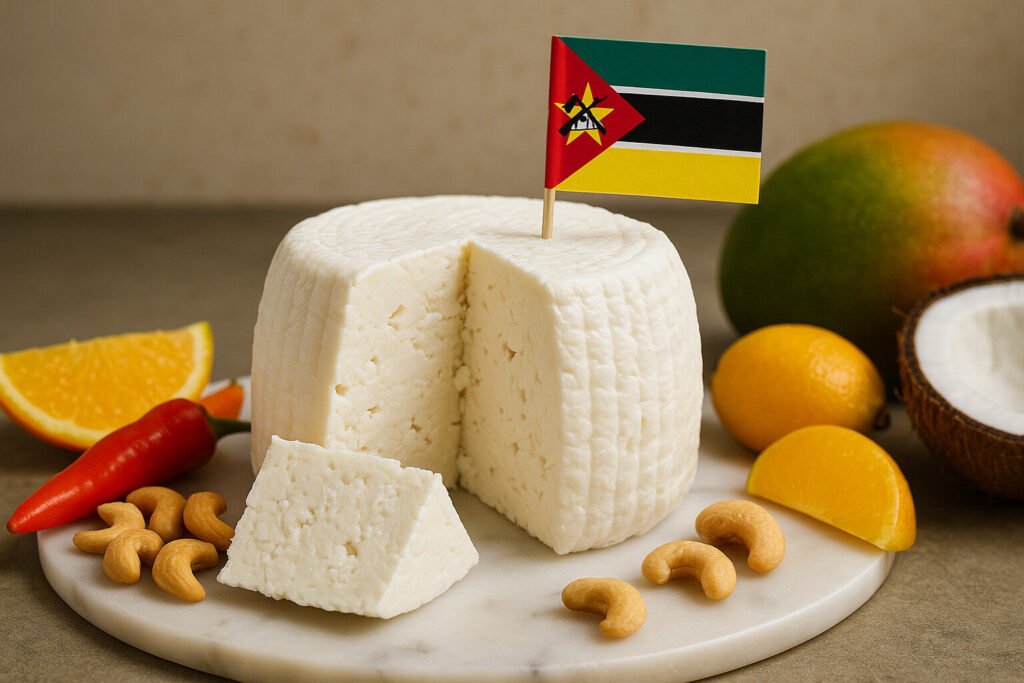
Queijo de Cabra de Moçambique is a celebrated goat cheese from Mozambique, known for its artisanal craftsmanship and vibrant flavors. This cheese captures the essence of Mozambican terroir with its balanced acidity and creamy texture. Chefs and cheese lovers prize it for its versatility in both raw and cooked applications.
In this article
Distinctive Features of Queijo de Cabra de Moçambique
Queijo de Cabra de Moçambique typically forms wheels weighing about 1 kilogram. Its rind develops a natural, edible surface that may show slight mold blooms. The paste inside ranges from white to pale yellow, depending on aging.
The texture is semi-firm yet supple, allowing easy slicing. It contains approximately 45% fat in dry matter, contributing to its rich mouthfeel. Humidity levels remain moderate, preventing excessive dryness during maturation.
Queijo de Cabra de Moçambique Varieties
Fresh Queijo de Cabra de Moçambique is consumed within days of production. It has a mild, lactic flavor and a moist, spreadable consistency. This variety often includes herbs or spices for added complexity.
Aged Queijo de Cabra de Moçambique matures for three to six months. It develops a firmer texture and a more pronounced, tangy taste. Some producers smoke the cheese over local woods for a distinctive aroma.
History and Traditions of Queijo de Cabra de Moçambique
Queijo de Cabra de Moçambique originated in rural communities where goat rearing was common. Portuguese colonizers introduced dairy techniques that blended with indigenous practices. This fusion created a cheese unique to Mozambique’s cultural landscape.
The cheese became a staple in family meals and festive gatherings. It symbolizes resourcefulness and culinary heritage in Mozambican society. Many families pass down cheese-making secrets through generations, preserving its authenticity.
Production Process and Producers
Producers use fresh, whole goat’s milk sourced from local herds. The milk undergoes pasteurization before adding rennet for coagulation. Curds are cut, drained, and pressed into molds to form the characteristic wheels.
Ripening occurs in controlled environments for one to six months. Temperature and humidity are carefully monitored to develop flavor. Main producers include Fazenda Caprina, Cooperativa de Cabritos, and Queijaria Nacional, all based in Mozambique.
Quality Labels and Certifications
As to our current knowledge, Queijo de Cabra de Moçambique does not hold international PDO or PGI status. Local initiatives may offer quality assurance labels for artisanal production. These labels often verify traditional methods and ingredient sourcing.
Some producers pursue organic certifications to appeal to health-conscious consumers. These certifications ensure no synthetic additives are used in the cheese. However, widespread formal labeling remains limited in the region.
Wine or Beverage Pairings
Local Mozambican wines like Tinto de Maputo complement Queijo de Cabra de Moçambique well. Their fruity notes balance the cheese’s tanginess. Light-bodied reds enhance the creamy texture without overpowering it.
International pairings include Sauvignon Blanc or dry cider. These beverages cut through the richness of the cheese. For non-alcoholic options, try citrus-infused water or rooibos tea.
Suitable Fruit and Vegetables
Fresh figs and mangoes pair excellently with Queijo de Cabra de Moçambique. Their sweetness contrasts with the cheese’s acidity. Serve them sliced alongside for a refreshing combination.
Roasted bell peppers and olives also complement this cheese. They add earthy and briny notes that enhance its flavor. Include raw spinach or arugula for a peppery backdrop.
Suitable Meat and Fish Dishes
Grilled chicken or fish benefit from grated Queijo de Cabra de Moçambique. The cheese melts smoothly, adding creaminess to the dish. It works well in Mozambican peri-peri marinades.
Cured meats like chouriço create a savory pairing. The cheese’s tanginess cuts through the fat of the meat. Incorporate it into stews or rice dishes for added depth.
Presentation of Queijo de Cabra de Moçambique
Remove Queijo de Cabra de Moçambique from the refrigerator one hour before serving. This allows it to reach an ideal temperature of 18 to 20 degrees Celsius. Serve it on a wooden or slate plate to showcase its texture.
Arrange the cheese in wedges or slices for easy access. Use a cheese knife for cutting and a fork for serving. Provide small plates and napkins for guests to enjoy it comfortably.
Questions and Answers
What is Queijo de Cabra de Moçambique?
Queijo de Cabra de Moçambique is a traditional goat cheese from Mozambique. It features a semi-firm texture and a tangy flavor profile. This cheese is made using age-old methods passed down through generations.
How should I store Queijo de Cabra de Moçambique?
Store Queijo de Cabra de Moçambique in the refrigerator wrapped in wax paper. Keep it in the vegetable drawer to maintain humidity. Consume within two weeks for optimal freshness.
Can I freeze Queijo de Cabra de Moçambique?
Freezing Queijo de Cabra de Moçambique is not recommended. It alters the texture and may cause crumbiness. Always enjoy it fresh or properly refrigerated.
Where can I buy Queijo de Cabra de Moçambique?
Purchase Queijo de Cabra de Moçambique from specialty cheese shops or online retailers. In Mozambique, local markets and cooperatives are reliable sources. Importers may stock it in international gourmet stores.
What is the shelf life of Queijo de Cabra de Moçambique?
The shelf life of Queijo de Cabra de Moçambique is about three weeks when refrigerated. Aged varieties last longer due to lower moisture content. Always check for any off odors before consumption.
How do I cut Queijo de Cabra de Moçambique?
Cut Queijo de Cabra de Moçambique with a sharp cheese knife into wedges or slices. For even portions, slice from the center outward. This method preserves the cheese’s structure and appearance.
Can Queijo de Cabra de Moçambique be used in cooking?
Yes, Queijo de Cabra de Moçambique melts beautifully in cooked dishes. It enhances sauces, gratins, and baked goods. Its flavor intensifies when heated, adding depth to recipes.
Is Queijo de Cabra de Moçambique lactose-free?
Queijo de Cabra de Moçambique contains minimal lactose due to fermentation. Those with mild lactose intolerance may tolerate it well. Always consult a healthcare provider for dietary concerns.
What makes Queijo de Cabra de Moçambique unique?
Queijo de Cabra de Moçambique stands out for its balance of tang and creaminess. It reflects Mozambique’s diverse climate and agricultural practices. The cheese’s artisanal production ensures high quality and authenticity.
How should I serve Queijo de Cabra de Moçambique to guests?
Serve Queijo de Cabra de Moçambique at room temperature on a cheese board. Pair it with fruits, nuts, and crackers for variety. Offer a variety of beverages to complement its flavors.
Recipe Ideas
Queijo de Cabra de Moçambique Salad
This salad highlights the fresh, tangy notes of Queijo de Cabra de Moçambique. It combines crisp greens with creamy cheese for a balanced dish. The recipe is quick to prepare and perfect for warm weather.
Using local Mozambican ingredients adds authenticity to the salad. The cheese pairs well with citrus-based dressings. Serve it as a starter or light main course.
- 150 grams Queijo de Cabra de Moçambique, cubed
- 200 grams mixed salad greens
- 1 ripe mango, sliced
- 50 grams red onion, thinly sliced
- 30 milliliters olive oil
- 15 milliliters lime juice
- Salt and pepper to taste
- Wash and dry the salad greens thoroughly.
- Combine greens, mango, and red onion in a large bowl.
- Whisk olive oil, lime juice, salt, and pepper for the dressing.
- Toss the salad with the dressing gently.
- Add cubed Queijo de Cabra de Moçambique and mix lightly.
- Serve immediately to maintain freshness.
Baked Queijo de Cabra de Moçambique with Herbs
Baking enhances the creamy texture of Queijo de Cabra de Moçambique. This dish is ideal for entertaining or family dinners. The herbs infuse the cheese with aromatic flavors.
It can be served as a dip or spread for bread. The recipe uses simple, accessible ingredients. Baking time is short to prevent the cheese from drying out.
- 200 grams Queijo de Cabra de Moçambique, whole wheel
- 2 cloves garlic, minced
- 10 grams fresh thyme
- 10 grams fresh rosemary
- 20 milliliters olive oil
- Crusty bread for serving
- Preheat the oven to 180 degrees Celsius.
- Place the cheese wheel in a small baking dish.
- Mix garlic, thyme, rosemary, and olive oil in a bowl.
- Spread the herb mixture over the cheese wheel.
- Bake for 10-12 minutes until soft and bubbly.
- Serve hot with slices of crusty bread.
Similar Cheeses and Alternatives
Queijo de Cabra de Moçambique shares similarities with other goat cheeses like French Chèvre. Both offer a tangy profile and creamy texture. However, Mozambican varieties often have a milder acidity due to local diet and climate.
Spanish Cabrales provides a stronger alternative for those seeking bold flavors. Its blue veining and intense taste contrast with the smoother Queijo de Cabra de Moçambique. Portuguese Serra da Estrela is another option, though it uses sheep’s milk instead of goat’s.