
Akkawi Cheese from Lebanon – A Salty Delight
Discover Akkawi, Lebanon’s beloved brined cheese. Perfect for pastries, salads, and grilling. Mild, salty, and delightfully versatile.
Akkawi Cheese from Lebanon – A Salty Delight Read More »
Cheese is a dairy product derived from milk through coagulation of the milk protein casein. It encompasses a vast range of textures, flavors, and forms produced globally. The scope includes fresh, soft-ripened, semi-hard, hard, and blue-veined varieties. This diversity results from differences in milk source, production methods, and aging duration.
Cheese is categorized by factors such as moisture content, fat level, and the type of rind. These classifications help organize the thousands of known cheese styles into manageable groups. The product’s definition extends to include cheeses made from cow, goat, sheep, or buffalo milk. Each category exhibits distinct chemical and physical properties.
Fundamental cheese production begins with acidification, where starter cultures convert lactose into lactic acid. Rennet is then typically added to coagulate the milk, forming curds and whey. The curds are cut, cooked, and drained to expel moisture and achieve the desired texture. This basic process is universal, though parameters vary widely.
Further techniques like cheddaring, stretching, or pressing define specific cheese styles. Aging, or affinage, in controlled environments develops flavor and texture complexity. Washed-rind cheeses are treated with brine or other solutions to encourage specific bacterial growth. These technical choices directly determine the final cheese’s category and properties.
The sensory evaluation of cheese involves assessing its appearance, aroma, texture, and flavor. Visual characteristics include paste color, presence of eyes or veins, and rind type. Aromas can range from milky and buttery to pungent and earthy, depending on the cheese’s age and microbiology. Texture is a critical property, classified from soft and spreadable to hard and granular.
Flavor profiles are complex, deriving from milk compounds, microbial metabolism, and enzymatic breakdown during aging. Tastes can include sweet, salty, sour, bitter, and savory umami notes. The finish, or aftertaste, is also a key component of a cheese’s overall sensory profile. These properties are systematically used in cheese taxonomy and style identification.
Cheese serves numerous culinary roles, from a table cheese eaten alone to a melting agent in cooked dishes. Its functional properties, such as meltability and stretch, are critical in applications like pizza and gratins. The flavor intensity of a cheese often dictates its use, with milder varieties suited for sandwiches and stronger ones for flavoring.
In food science, cheese is valued for its nutritional content, providing protein, fat, calcium, and vitamins. Different styles are paired with specific beverages, such as wine or beer, based on complementary flavor profiles. Understanding a cheese’s properties allows for its optimal use in both traditional and modern gastronomy.
France’s Camembert is a famous soft-ripened cheese with a white, bloomy rind and a creamy interior. It is made from cow’s milk and has a characteristic earthy, mushroomy flavor. Italy’s Parmigiano-Reggiano is a hard, granular cheese aged for a minimum of 12 months. Its production is strictly regulated within a designated region of origin.
English Cheddar is a versatile semi-hard to hard cheese known for its firm texture and sharp, tangy flavor. It undergoes a unique cheddaring process during production. Netherlands’ Gouda varies from young and mild to aged and crystalline, showcasing how one style can offer a spectrum of sensory experiences based on aging time.
Discover Akkawi, Lebanon’s beloved brined cheese. Perfect for pastries, salads, and grilling. Mild, salty, and delightfully versatile.
Akkawi Cheese from Lebanon – A Salty Delight Read More »
Discover Serdale, a traditional Lebanese cheese known for its unique flavor and artisanal heritage. Perfect for authentic Middle Eastern dishes.
Serdale Cheese from Lebanon – A Taste of Tradition Read More »
Discover Majdouli, a traditional Lebanese cheese known for its unique texture and savory flavor. Perfect for authentic Middle Eastern dishes.
Majdouli Cheese from Lebanon – A Salty Delight Read More »
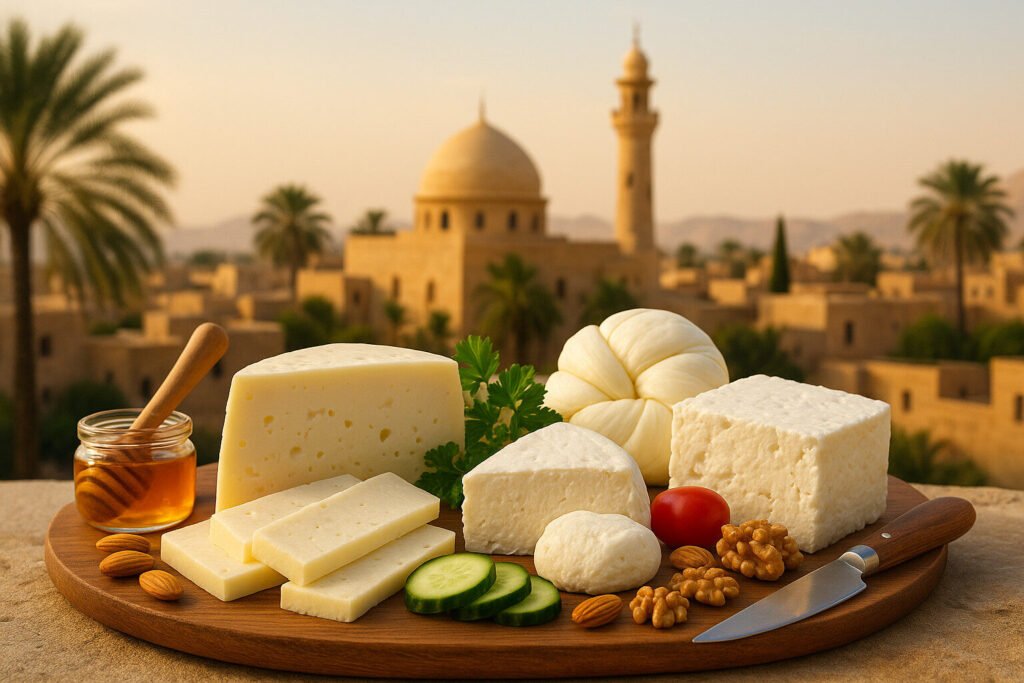
Arab Countries span a vast geographic and cultural expanse, including Algeria, Bahrain, Comoros, Djibouti, Egypt, Iraq, Jordan, Kuwait, Lebanon, Libya, Morocco,
Arab Countries Cheese: A Comprehensive Guide Read More »

West Asia boasts a vibrant and ancient cheese culture. This region, encompassing Turkey, Georgia, Armenia, Azerbaijan, Iran, Iraq, Israel, Jordan, Lebanon, Syri
West Asia Cheese: A Comprehensive Guide Read More »

Levant cheese culture reflects a rich and ancient dairy tradition. This region, encompassing Israel, Lebanon, Jordan, Syria, and Palestine, produces a stunning
Levant Cheese: A Comprehensive Guide Read More »